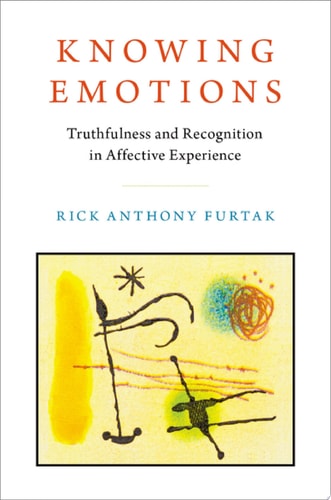
Knowing Emotions: Truthfulness and Recognition in Affective Experience
0
0
As an Amazon Associate and affiliate partner, Menrva Books earns from qualifying purchases. Learn more
Author Description
How do our emotions enable us to know? When Pascal noted that the heart has its own reasons, he implied that our rational faculty alone cannot grasp what is revealed in affective experience. Knowing Emotions seeks to explain comprehensively why human emotions are more than physiological disturbances, but experiences capable of making us aware of significant truths that we could not know by any other means. Recent philosophical and interdisciplinary research on the emotions has been dominated by a renewal of the debate over how best to characterize the intentionality of emotions as well as their bodily character. Rick Anthony Furtak frames this debate differently, however, arguing that intentionality and feeling are not two discrete parts of affective experience, but conceptually distinguishable aspects of a unified response. His account captures how an emotion's phenomenal or 'felt' quality (what it is like) relates to its intentional content (what it is about). Knowing Emotions provides a solid introduction to the philosophy of emotion before delving into the debates that surround it. Furtak draws from a wide range of analytic and Continental philosophers, including Sartre, Merleau-Ponty, Kierkegaard, and Nietzsche, among others, and bolsters his analysis with empirical evidence from social psychology, neuroscience, and psychiatry. Perhaps most importantly, Furtak investigates all varieties of affective experience, from brief episodes to moods and emotional dispositions, loves and other longstanding concerns, and overall patterns of temperament and affective outlook. Ultimately, he argues that we must reject the misguided aspiration to purify ourselves of passion and attain an impersonal standpoint. Knowing Emotions attempts to clarify what kind of truth may be revealed through emotion, and what can be known - not despite, but precisely by virtue of, each person's idiosyncratic perspective.
Menrva's Summary
THE THESIS
This work investigates the core question of how human emotions function as a legitimate source of knowledge rather than mere physiological disturbances. Rick Anthony Furtak, a scholar in the field of philosophy, synthesizes perspectives from both analytic and Continental traditions to argue that affective experience provides unique access to truths inaccessible through purely rational or impersonal means. By integrating insights from neuroscience, psychiatry, and social psychology, he posits that intentionality and feeling are unified aspects of a single cognitive response.
THE SCOPE MAP
What You Will Find
- A comprehensive framework for understanding the intentionality and phenomenal quality of emotions.
- Comparative analysis of philosophical figures including Sartre, Merleau-Ponty, Kierkegaard, and Nietzsche.
- Examination of diverse affective states ranging from fleeting episodes to long-term emotional dispositions and temperaments.
Scope Limits
- The text does not provide a clinical manual for emotional regulation or therapeutic intervention.
- It does not attempt to resolve every debate within the philosophy of mind, focusing instead on the epistemological value of affect.
THE AUTHORITY PERSPECTIVE
Scholars and students of philosophy frequently identify this text as a rigorous bridge between classical existentialist thought and contemporary cognitive science. Experts highlight the author's ability to maintain academic precision while addressing the subjective nature of human experience.
Page Count:
249
Publication Date:
2018-01-01
Publisher:
Oxford University Press
ISBN-10:
0190862076
ISBN-13:
9780190862077
Philosophy
Psychology
Philosophy of
Affective Science
Epistemology
Mind & Body
Community Tags
Similar Books