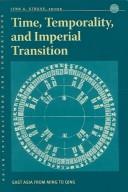
Time, Temporality, and Imperial Transition
0
0
As an Amazon Associate and affiliate partner, Menrva Books earns from qualifying purchases. Learn more
Author Description
Time is basic to human consciousness and action, yet paradoxically historians rarely ask how time is understood, manipulated, recorded, or lived. Cataclysmic events in particular disrupt and realign the dynamics of temporality among people. For historians, these temporal effects are especially significant on large polities such as empires - the power projections of which always involve the dictation of time. This volume is an investigation of precisely such temporal effects, focusing on the northern and eastern regions of the Asian subcontinent in the seventeenth century, when the polity at the core of East Asian civilization, Ming-dynasty China, collapsed and was replaced by the Manchu-ruled Qing dynasty. The consequences of this change were far-reaching for the temporal sensibility and historical outlook of not only the Chinese and Manchus, but also peoples directly affected by their respective fortunes: the Koreans and the Mongols. At the same time, to the southeast in China, European missionaries were groping for compromises between the temporal demands of the Confucian and Catholic worlds. Time, Temporality, and Imperial Transition not only expands our knowledge of a turning point in Asian history, but also suggests how a new perspective on the dynamics of social time in universal time can heighten our understanding of the human condition past and present.--BOOK JACKET.
Menrva's Summary
THE THESIS
This volume investigates the profound disruptions and realignments of temporality that occur during periods of imperial transition, focusing on the 17th-century East Asian subcontinent. The book examines how the collapse of Ming-dynasty China and the rise of the Qing dynasty impacted the temporal sensibilities and historical outlooks of the Chinese, Manchus, Koreans, and Mongols. It also explores the temporal negotiations undertaken by European missionaries in China between Confucian and Catholic worlds. The work aims to expand knowledge of this pivotal moment in Asian history and to offer a new perspective on social time within universal time to enhance understanding of the human condition.
THE SCOPE MAP
- An examination of temporal effects during the Ming-Qing dynastic transition in 17th-century China.
- Analysis of the impact on the temporal sensibilities of Koreans and Mongols, who were directly affected by Chinese fortunes.
- Exploration of the temporal compromises sought by European missionaries between Confucian and Catholic temporal demands.
- A focus on how large polities, particularly empires, project power through the dictation and manipulation of time.
- An argument for understanding the human condition through the dynamics of social time within universal time.
THE AUTHORITY PERSPECTIVE
The book is presented as a significant contribution to understanding a critical turning point in Asian history, offering a novel perspective on the dynamics of social time. It suggests that by examining how time is understood, manipulated, recorded, and lived, particularly during cataclysmic events like imperial transitions, we can gain deeper insights into the human condition. The work is framed to appeal to both historians of Asia and those interested in broader theoretical questions about temporality and human experience.
Page Count:
300
Publication Date:
2005-01-01
ISBN-10:
0824828275
ISBN-13:
9780824828271
Non-Fiction
History
Imperialism
Asian History
Social History
Cultural History
Community Tags
Similar Books