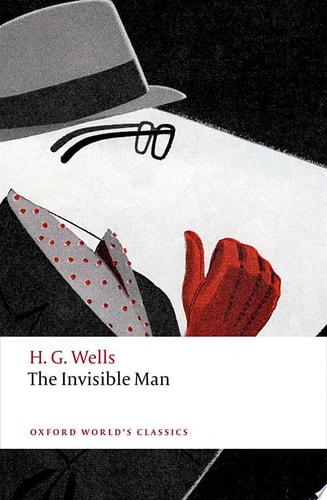
The Invisible Man
0
0
As an Amazon Associate and affiliate partner, Menrva Books earns from qualifying purchases. Learn more
Author Description
'the Man's Become Inhuman... He Has Cut Himself Off From His Kind. His Blood Be Upon His Own Head.' One Night In The Depths Of Winter, A Bizarre And Sinister Stranger Wrapped In Bandages And Eccentric Clothing Arrives In A Remote English Village. His Peculiar, Secretive Activities In The Room He Rents Spook The Locals. Speculation About His Identity Becomes Horror And Disbelief When The Villagers Discover That, Beneath His Disguise, He Is Invisible. Griffin, As The Man Is Called, Is An Embittered Scientist Who Is Determined To Exploit His Extraordinary Gifts, Developed In The Course Of Brutal Self-experimentation, In Order To Conduct A Reign Of Terror On The Sleepy Inhabitants Of England. As The Police Close In On Him, He Becomes Ever More Desperate And Violent. In This Pioneering Novella, Subtitled 'a Grotesque Romance', Wells Combines Comedy, Both Farcical And Satirical, And Tragedy - To Superbly Unsettling Effect. Since Its Publication In 1897, The Invisible Man Has Haunted Not Only Popular Culture (in Particular Cinema) But Also The Greatest And Most Experimental Novels Of The Twentieth Century.
Menrva's Summary
THE PULSE
A scientist discovers the secret to invisibility, only to find that his newfound power isolates him from humanity and drives him toward madness. Griffin, a brilliant but volatile researcher, successfully renders himself invisible through a series of dangerous experiments. His objective is to reclaim his status and power, but he is thwarted by his own lack of foresight and the mounting suspicion of the villagers in Iping. The narrative framework utilizes a third-person perspective that shifts between the perspective of the terrified villagers and the increasingly erratic internal state of the protagonist. The story operates under the logical constraints of Victorian-era scientific curiosity, where the physical reality of invisibility creates a profound psychological and social rift between the individual and society.
INSIDE THE PAGES
- Exploration of the moral consequences of scientific advancement
- Use of a remote English village as a microcosm for social reaction
- Gradual shift from mystery to psychological horror
- Integration of satirical elements regarding human nature
- Detailed depiction of the physical limitations of invisibility
- Pacing that accelerates as the protagonist loses his grip on reality
- Focus on the isolation inherent in being unseen
- Examination of the conflict between individual ambition and societal norms
THE COLLECTIVE ECHO
Discussion often centers on the ethical implications of Griffin's transformation and the inevitable descent into megalomania. Readers frequently highlight the effectiveness of the atmosphere, noting how the author balances the absurdity of the situation with genuine dread. Critics often point to the work as a foundational text that explores the intersection of scientific hubris and social alienation. The narrative is widely regarded for its ability to maintain tension while providing a sharp critique of the era's obsession with progress. Many readers find the protagonist's lack of empathy to be the most chilling aspect of the story, solidifying its status as a classic of the genre.
Page Count:
208
Publication Date:
2016-01-01
Publisher:
Oxford University Press
ISBN-10:
019100720X
ISBN-13:
9780191007200
Horror
Thriller
Science Fiction
classic
Speculative Fiction
Community Tags
Other Editions(73)

BoD - Books on Demand
2023
Default edition
Evertype
2022

Independently Published
2021

Independently Published
2021
True Sign Publishing House
2021

Independently Published
2020

Independently Published
2020

Independently Published
2020

Independently Published
2020

Independently Published
2020

Independently Published
2020
Independently Published
2019
Independently Published
2019
Independently Published
2019

Simon & Brown
2018

Simon & Brown
2018

CreateSpace Independent Publishing Platform
2018

Sde Classics
2018

CreateSpace Independent Publishing Platform
2018

Independently Published
2018

Max Bollinger
2018

CreateSpace Independent Publishing Platform
2018

CreateSpace Independent Publishing Platform
2018

Independently Published
2018
Independently Published
2018
CreateSpace Independent Publishing Platform
2018

CreateSpace Independent Publishing Platform
2018

CreateSpace Independent Publishing Platform
2018
CreateSpace Independent Publishing Platform
2017
e-artnow
2017
CreateSpace Independent Publishing Platform
2017

Independently Published
2017

CreateSpace Independent Publishing Platform
2017

CreateSpace Independent Publishing Platform
2017

CreateSpace Independent Publishing Platform
2017

CreateSpace Independent Publishing Platform
2017

CreateSpace Independent Publishing Platform
2017

CreateSpace Independent Publishing Platform
2017

CreateSpace Independent Publishing Platform
2017

Independently Published
2017

CreateSpace Independent Publishing Platform
2017

CreateSpace Independent Publishing Platform
2017

CreateSpace Independent Publishing Platform
2017

CreateSpace Independent Publishing Platform
2017

Independently Published
2017

CreateSpace Independent Publishing Platform
2017

CreateSpace Independent Publishing Platform
2017

Lulu.com
2017

CreateSpace Independent Publishing Platform
2016

CreateSpace Independent Publishing Platform
2016

CreateSpace Independent Publishing Platform
2016

CreateSpace Independent Publishing Platform
2016
Oxford University Press
2016
CreateSpace Independent Publishing Platform
2015
CCS Books
2015
CreateSpace Independent Publishing Platform
2015

CreateSpace Independent Publishing Platform
2015

CreateSpace Independent Publishing Platform
2014

CreateSpace Independent Publishing Platform
2014
Macmillan Education
2014
CreateSpace Independent Publishing Platform
2013
CreateSpace Independent Publishing Platform
2012

Penguin Publishing Group
2010
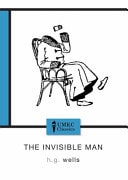
Mizzou Publishing - The Mizzou Store
2010
Penguin USA, Inc.
2009
Stone Arch Books
2007

ICON Classics
2005

Durkin Hayes Publishing
1997

Oxford University Press
1996

Baronet Books
1995

Macmillan
1992
Ladybird Books
1988

Huge Print Press
1900
Similar Books



Reader Comments
Share Your Thoughts
No comments yet. Be the first to share your thoughts!