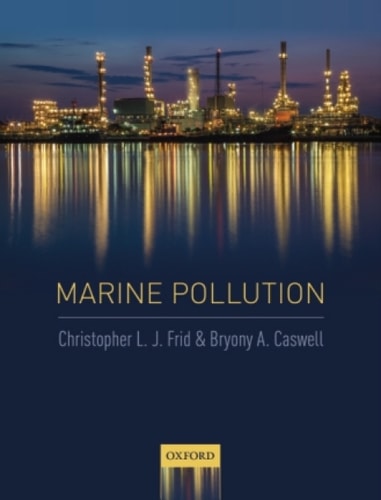
Marine Pollution
0
0
As an Amazon Associate and affiliate partner, Menrva Books earns from qualifying purchases. Learn more
Author Description
As a society, we use more than 100,000 different industrial compounds to promote health and treat disease, to grow food and to access clean water. While technological developments have improved our lives, most of these compounds end up in our oceans where they threaten marine life and human health. The practice of ocean waste disposal has had a long history and was initially believed to have minimal associated costs. However, it is now clear that although we can use the oceans for cheap waste treatment, we do this at the expense of the other key benefits we derive from the sea, notably human food supplies as well as its aesthetic value (including opportunities for recreation and tourism). Many of the pollution problems of previous decades appear to have been solved in the developed world, or at least managed to minimise their environmental impacts. However, despite treatment being available for some waste products, a potent mixture of toxic compounds and other potentially harmful additions continue to enter the marine environment every day. So, have the problems of marine pollution really been solved or have we simply generated a suite of different and potentially more complex challenges? In this volume we consider marine pollution from the perspective of the historical problems that are now successfully managed or solved, the ongoing problems and the emerging challenges that we face. These include hormone mimics, the residues from pharmaceuticals, nanometre-sized particles added to new materials, the millimetric plastics added to shampoos and cosmetics, the artificial fibres in the clothes we wear, and the noise and light pollution from our expanding industries and cities. Marine Pollution is aimed at senior undergraduates, masters and graduate level students studying marine sciences. It will also serve as a useful reference for researchers and professionals working in the fields of environmental management, marine planning, marine environmental regulation and prot
Menrva's Summary
THE THESIS
This volume investigates whether the historical problems of marine pollution have been effectively resolved or if modern industrial society has merely shifted toward more complex, emerging environmental challenges. Authors Bryony A. Caswell and Christopher L. J. Frid, both established experts in marine science, synthesize historical data on waste disposal with current research on emerging contaminants. They argue that while traditional point-source pollution is better managed in developed nations, the proliferation of novel compounds necessitates a re-evaluation of ocean health and regulatory frameworks.
THE SCOPE MAP
What You Will Find
- Historical analysis of ocean waste disposal practices and their long-term consequences.
- Examination of emerging pollutants including pharmaceutical residues, hormone mimics, and nanomaterials.
- Discussion of physical pollutants such as microplastics and synthetic fibers.
- Assessment of non-chemical stressors like noise and light pollution in marine environments.
Scope Limits
- The text focuses primarily on the scientific and management aspects of pollution rather than providing a comprehensive policy-making manual.
- It does not offer exhaustive solutions for every specific pollutant mentioned, focusing instead on the identification and characterization of the challenges.
THE AUTHORITY PERSPECTIVE
Experts and academics identify this text as a rigorous resource for senior undergraduate and graduate students in marine sciences. Readers frequently note the technical density of the prose and its utility as a foundational reference for professionals in environmental regulation and marine planning.
Page Count:
288
Publication Date:
2017-01-01
Publisher:
OUP Oxford
ISBN-10:
0191039713
ISBN-13:
9780191039713
Science
Ecology
Pollution Control
Marine Biology
Community Tags
Similar Books