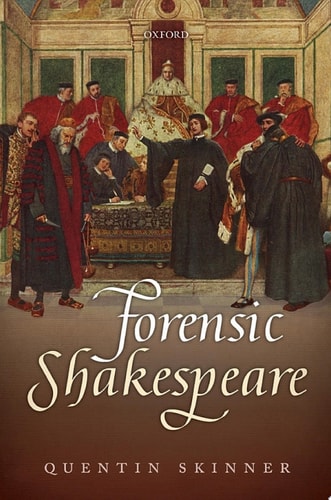
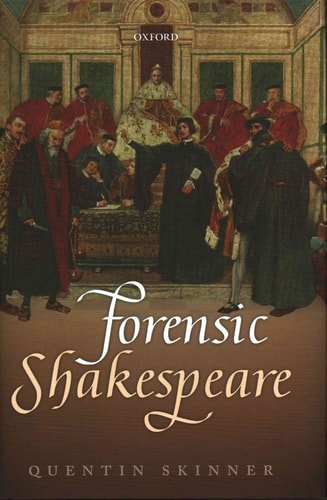
Forensic Shakespeare
0
0
As an Amazon Associate and affiliate partner, Menrva Books earns from qualifying purchases. Learn more
Author Description
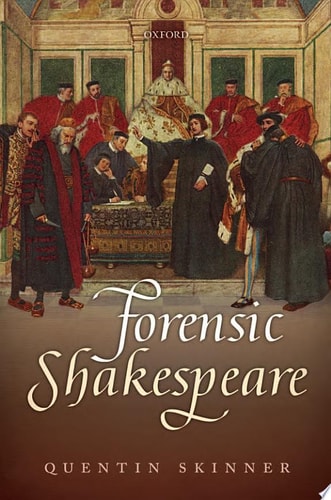
Forensic Shakespeare illustrates Shakespeare's creative processes by revealing the intellectual materials out of which some of his most famous works were composed. Focusing on the narrative poem Lucrece, on four of his late Elizabethan plays (Romeo and Juliet, The Merchant of Venice, Julius Caesar and Hamlet) and on three early Jacobean dramas, (Othello, Measure for Measure and All's Well That Ends Well), Quentin Skinner argues that major speeches, and sometimes sequences of scenes, are crafted according to a set of rhetorical precepts about how to develop a persuasive judicial case, either in accusation or defence. Some of these works have traditionally been grouped together as 'problem plays', but here Skinner offers a different explanation for their frequent similarities of tone. There have been many studies of Shakespeare's rhetoric, but they have generally concentrated on his wordplay and use of figures and tropes. By contrast, this study concentrates on Shakespeare's use of judicial rhetoric as a method of argument. By approaching the plays from this perspective, Skinner is able to account for some distinctive features of Shakespeare's vocabulary, and also help to explain why certain scenes follow a recurrent pattern and arrangement. More broadly, he is able to illustrate the extent of Shakespeare's engagement with an entire tradition of classical and Renaissance humanist thought.
Menrva's Summary
THE THESIS
This book investigates how Shakespeare utilized the specific rhetorical structures of judicial oratory to construct persuasive arguments and dramatic tension within his plays. Quentin Skinner, a renowned intellectual historian, applies his expertise in Renaissance political and rhetorical thought to analyze the playwright's creative process. He argues that Shakespeare did not merely use rhetorical figures for ornamentation, but employed formal judicial precepts to organize scenes and speeches, thereby shaping the logical development of his narratives.
THE SCOPE MAP
What You Will Find
- Analysis of judicial rhetoric as a structural tool in Shakespearean drama.
- Examination of the narrative poem Lucrece and seven major plays including Hamlet, Othello, and The Merchant of Venice.
- Exploration of the intersection between Renaissance humanist education and dramatic composition.
Scope Limits
- The study does not focus on Shakespeare's use of wordplay, tropes, or figures of speech in the traditional stylistic sense.
- It does not provide a comprehensive biography of the author or a general history of Elizabethan theater.
THE AUTHORITY PERSPECTIVE
Scholars recognize this work as a significant contribution to the study of Shakespearean rhetoric, shifting the focus from decorative language to structural argumentation. Readers frequently note the academic density of the prose, which requires a foundational understanding of Renaissance humanist traditions to fully appreciate the author's methodology.
Page Count:
368
Publication Date:
2014-10-30
Publisher:
OUP Oxford
ISBN-10:
0191056642
ISBN-13:
9780191056642
Literary Criticism
English
Rhetoric
Great Britain
English & College Success
History of Ideas
Community Tags
Other Editions(4)

Similar Books