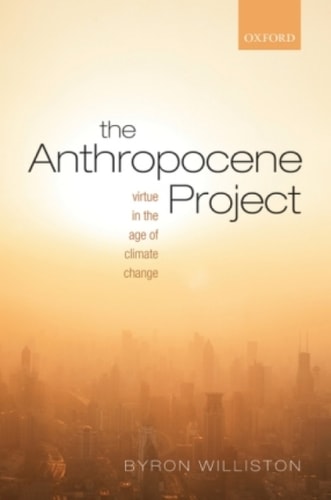
The Anthropocene Project: Virtue in the Age of Climate Change
0
0
As an Amazon Associate and affiliate partner, Menrva Books earns from qualifying purchases. Learn more
Author Description
The evidence presented in the recently released Fifth Assessment Report (AR5) of the Intergovernmental Panel on Climate Change (IPCC) suggests strongly that continued failure to make meaningful cuts to greenhouse gas emissions could bring about disastrous results for the human community, especially for future generations. Summing up the findings of AR5, Rajendra Pachauri, chairman of the IPCC, has stated that our persistent inaction on climate change presents a grave threat to the very social stability of human systems. The Anthropocene Project attempts to make philosophical sense of this, examining the reasons for the inaction highlighted by the IPCC, and suggests the normative bases for overcoming it. Williston identifies that we are now in the human agethe Anthropocenebut he argues that this is no mere geological marker. It is instead best viewed as the latest permutation of an already existing moral and political project rooted in Enlightenment values. The author shows that it can be fruitful to do climate ethics with this focus because in so many aspects of our culture we already endorse broadly Enlightenment values about progress, equality, and the value of knowledge. But these values must be robustly instantiated in the dispositions of moral agents, and so we require a climate ethics emphasizing the virtues of justice, truthfulness, and rational hope. One of the books most original claims is that our moral failure on this issue is, in large part, the product of motivated irrationality on the part of the world's most prosperous people. We have failed to live up to our commitments to justice and truthfulness because we are, respectively, morally weak and self-deceived. Understanding this provides the basis for the rational hope that we might yet find a way to avoid climate catastrophe.
Menrva's Summary
THE THESIS
How can the philosophical framework of Enlightenment values be utilized to address the moral failures and systemic inaction surrounding climate change? Byron Williston, a scholar of environmental ethics, argues that the Anthropocene is not merely a geological epoch but a moral and political project. By analyzing the psychological and cultural barriers to climate action, he posits that cultivating specific virtues—justice, truthfulness, and rational hope—is necessary to align human behavior with the urgency of the climate crisis.
THE SCOPE MAP
What You Will Find
- Analysis of the IPCC Fifth Assessment Report findings regarding social stability.
- A philosophical framework connecting Enlightenment values to modern environmental policy.
- Examination of motivated irrationality and moral weakness in prosperous societies.
Scope Limits
- The text does not provide technical scientific solutions or engineering strategies for carbon sequestration.
- It does not focus on specific legislative lobbying tactics or political campaign strategies.
THE AUTHORITY PERSPECTIVE
Scholars and readers frequently note the academic density of the prose, which requires a background in moral philosophy to fully grasp. Experts highlight this work as a significant contribution to the field of climate ethics by shifting the focus from purely economic or scientific data to the internal moral dispositions of human agents.
Page Count:
224
Publication Date:
2015-01-01
Publisher:
OUP Oxford
ISBN-10:
0191063657
ISBN-13:
9780191063657
Philosophy
Non-Fiction
Climate Change
Public Policy
Community Tags
Other Editions(2)
Similar Books

Reader Comments
Share Your Thoughts
No comments yet. Be the first to share your thoughts!