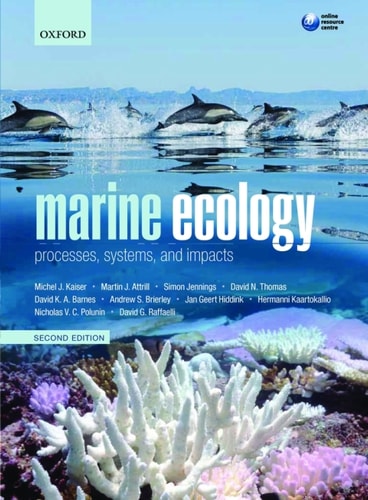
Marine Ecology: Processes, Systems, and Impacts
0
0
As an Amazon Associate and affiliate partner, Menrva Books earns from qualifying purchases. Learn more
Author Description
The oceans cover the majority of the Earth's surface; they influence our climate and provide a valuable source of food to billions of people. Yet despite its fundamental impact on our lives, many aspects of the marine environment remain a mystery to us. Marine Ecology: Processes, Systems, and Impacts offers a carefully balanced and stimulating survey of marine ecology, introducing the key processes and systems from which the marine environment is formed, and the issues and challenges which surround its future. Opening with an overview of the processes and interactions which are central to an understanding of marine ecology, the book goes on to explore the diverse systems from which the marine environment is composed, from estuaries to seabeds, the deep sea to polar regions. The final section examines human activities that impact upon the marine environment - fisheries, aquaculture, pollution, and global warming - before considering measures that can be taken to mitigate their adverse effects on this complex, fragile environment. The importance of understanding and conserving the marine environment has never been more apparent. Marine Ecology: Processes, Systems, and Impacts is an essential resource for any student wishing to develop a well balanced, informed understanding of this fascinating subject. · Striking full colour illustrations and photographs bring visual impact to the material presented · Many detailed case studies enliven the text and add a further level of depth and insight · Key concepts and issues are treated from a global perspective, using examples from around the world Online Resource centre The Online Resource Centre to accompany Marine Ecology: Processes, Systems, and Impacts features: For students: · Hyperlinked bibliography · Links to useful websites · Exam and essay writing advice For lecturers: · Journal Clubs · Figures from the book, available to download
Menrva's Summary
THE THESIS
This text investigates the fundamental biological and physical processes that govern marine ecosystems while evaluating the anthropogenic impacts threatening their stability. The authors, a team of established marine scientists, synthesize complex ecological data to provide a comprehensive framework for understanding how marine environments function from the shoreline to the deep sea. By integrating biological theory with practical environmental challenges, the book establishes a baseline for assessing the health and future of global ocean systems.
THE SCOPE MAP
What You Will Find
- Detailed analysis of marine processes including nutrient cycling, energy flow, and habitat interactions.
- Comprehensive surveys of diverse marine systems ranging from estuaries and coastal zones to polar regions and the deep sea.
- Examination of human-driven impacts such as commercial fisheries, aquaculture, pollution, and climate change.
Scope Limits
- The text focuses primarily on ecological processes and environmental management rather than detailed taxonomic identification of individual marine species.
- It does not provide exhaustive coverage of deep-sea geological formations beyond their role as ecological habitats.
THE AUTHORITY PERSPECTIVE
Academic reviewers and educators frequently cite this work as a balanced, accessible introduction for undergraduate students in marine biology and environmental science. Experts highlight the text's effective use of global case studies and visual aids to clarify complex ecological interactions.
Page Count:
154
Publication Date:
2011-01-01
Publisher:
Oxford University Press Academic UK
ISBN-10:
0191083747
ISBN-13:
9780191083747
Science
Ecology
Oceanography
Marine Biology
Community Tags
Similar Books



Reader Comments
Share Your Thoughts
No comments yet. Be the first to share your thoughts!