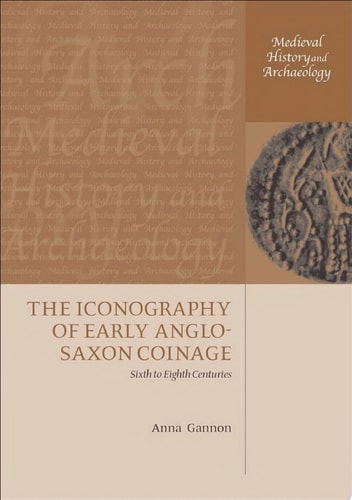
The Iconography of Early Anglo-Saxon Coinage: Sixth to Eighth Centuries
0
0
As an Amazon Associate and affiliate partner, Menrva Books earns from qualifying purchases. Learn more
Author Description
This is the first scholarly art-historical appraisal of Anglo-Saxon coinage, from its inception in the late sixth century to Offa's second reform of the penny c.792. Outside numismatic circles, this material has largely been ignored because of its complexity, yet artistically this is the most vibrant period of English coinage, with die-cutters showing flair and innovation and employing hundreds of different designs in their work. By analysing the iconography of the early coinage, this book intends to introduce its rich legacy to a wide audience. Anna Gannon divides the designs of the coins into four main categories: busts (including attributes and drapery), human figures, animals and geometrical patterns, presenting prototypes, sources of the repertoire and parallels with contemporary visual arts for each motif. The comparisons demonstrate the central role of coins in the eclectic visual culture of the time, with the advantages of official sanctioning and wide circulation to support and diffuse new ideas and images. The sources of the motifs clarify the relationship between the many designs of the complex Secondary phase (c.710-50). Contemporary literature and theological writings often offer the key to the interpretation of motifs, hinting at a universal preoccupation with religious themes. The richness of designs and display of learning point to a sophisticated patronage with access to exotic prototypes, excellent craftsmanship and wealth; it is likely that minsters, as rich, learned, and well-organized institutions, were behind some of the coinage. After the economic crises of the mid-eighth century this flamboyant iconography was swept away: with the notable exeption of the coins of Offa, still displaying exciting designs of high quality and inventiveness, reformed issues bore royal names and titles, and strove towards uniformity.
Menrva's Summary
THE THESIS
This book investigates the artistic and cultural significance of early Anglo-Saxon coinage, arguing that these small-scale objects served as vital conduits for complex visual and religious ideas. Anna Gannon, an expert in Anglo-Saxon art and numismatics, utilizes a comprehensive analysis of coin iconography to challenge the historical neglect of these artifacts. By examining the transition from early designs to the standardized issues of the late eighth century, she demonstrates that these coins reflect a sophisticated society with deep connections to contemporary theological and artistic traditions.
THE SCOPE MAP
What You Will Find
- A detailed classification of coin motifs into four categories: busts, human figures, animals, and geometrical patterns.
- Comparative analysis linking coin imagery to contemporary visual arts, literature, and theological texts.
- Evidence regarding the role of minsters and elite patronage in the production of coinage.
Scope Limits
- The study focuses primarily on the period from the late sixth century to the reforms of Offa c.792.
- The text does not provide an exhaustive economic history of the period, prioritizing art-historical and iconographic interpretation over monetary policy.
THE AUTHORITY PERSPECTIVE
Scholars and historians recognize this work as a foundational text for understanding the intersection of art history and numismatics in early medieval England. Readers frequently note the academic density of the prose, which provides a rigorous framework for interpreting the complex visual language of Anglo-Saxon coinage.
Page Count:
240
Publication Date:
2003-01-01
Publisher:
OUP Oxford
ISBN-10:
0191501336
ISBN-13:
9780191501333
History
Art History
Numismatics
European History
Archaeology
Community Tags
Other Editions(2)
Similar Books

Reader Comments
Share Your Thoughts
No comments yet. Be the first to share your thoughts!