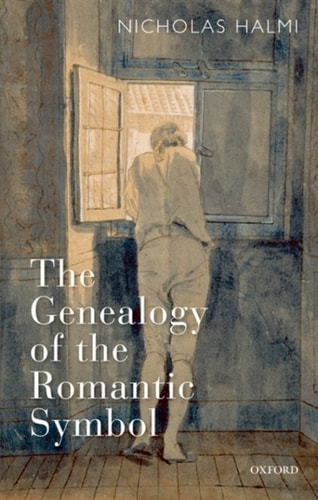
The Genealogy of the Romantic Symbol
0
0
As an Amazon Associate and affiliate partner, Menrva Books earns from qualifying purchases. Learn more
Author Description
Despite its widely acknowledged importance in and beyond the thought of the Romantic period, the distinctive concept of the symbol articulated by such writers as Goethe and F. W. J. Schelling in Germany and S. T. Coleridge in England has defied adequate historical explanation. In contrast to previous scholarship, Nicholas Halmi's study provides such an explanation by relating the content of Romantic symbolist theory - often criticized as irrationalist - to the cultural needs of its time. Because its genealogical method eschews a single disciplinary perspective, this study is able to examine the Romantic concept of the symbol in a broader intellectual context than previous scholarship, a context ranging chronologically from classical antiquity to the present and encompassing literary criticism and theory, aesthetics, semiotics, theology, metaphysics, natural philosophy, astronomy, poetry, and the origins of landscape painting. The concept is thus revealed to be a specifically modern response to modern discontents, neither reverting to pre-modern modes of thought nor secularizing Christian theology, but countering Enlightenment dualisms with means bequeathed by the Enlightenment itself. This book seeks, in short, to do for the Romantic symbol what Percy Bysshe Shelley called on poets to do for the world: to lift from it its veil of familiarity.
Menrva's Summary
THE THESIS
This study investigates the historical origins and cultural function of the Romantic concept of the symbol as articulated by figures such as Goethe, Schelling, and Coleridge. Nicholas Halmi, a scholar of Romanticism, challenges the characterization of Romantic symbolist theory as irrationalist by situating it within the specific cultural and intellectual pressures of the late eighteenth and early nineteenth centuries. By employing a genealogical method, the author argues that the Romantic symbol represents a modern response to Enlightenment dualisms, utilizing tools inherited from the Enlightenment to address contemporary intellectual anxieties.
THE SCOPE MAP
What You Will Find
- A cross-disciplinary analysis spanning literary criticism, aesthetics, semiotics, theology, and natural philosophy.
- A chronological examination of the symbol from classical antiquity through the Romantic period to the present.
- An investigation into the intersection of poetry, astronomy, and landscape painting in relation to symbolic theory.
Scope Limits
- The study does not provide a comprehensive history of all symbolic theories, focusing instead on the specific lineage of the Romantic concept.
- It does not attempt to resolve the metaphysical validity of the symbol, but rather analyzes its historical and cultural utility.
THE AUTHORITY PERSPECTIVE
Scholars and critics recognize this work as a significant contribution to the understanding of Romantic aesthetics, frequently noting the breadth of its interdisciplinary approach. It is often cited as a rigorous attempt to move beyond traditional, narrow interpretations of Romantic symbolism by contextualizing it within a broader history of ideas.
Page Count:
222
Publication Date:
2008-01-01
Publisher:
Oxford University Press
ISBN-10:
0191526444
ISBN-13:
9780191526442
Philosophy
English & College Success
Literary Criticism
English
Romanticism
Intellectual History
Aesthetics
Community Tags
Other Editions(4)


Similar Books
Reader Comments
Share Your Thoughts
No comments yet. Be the first to share your thoughts!