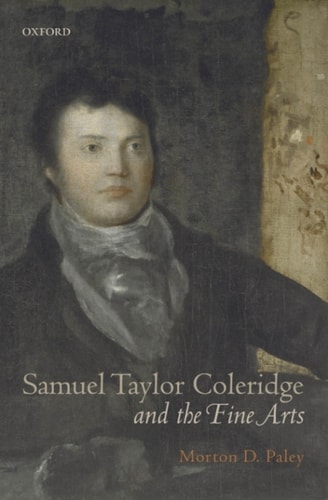
Samuel Taylor Coleridge and the Fine Arts
0
0
As an Amazon Associate and affiliate partner, Menrva Books earns from qualifying purchases. Learn more
Author Description
Although Coleridge's thinking and writing about the fine arts was both considerable and interesting, this has not been the subject of a book before. Coleridge owed his initiation into art to Sir George Beaumont. In 1803-4 he had frequent opportunities to learn from Beaumont, to study Beaumont's small but elegant collection and to visit private collections. Before leaving for Malta in April 1804, Coleridge wrote 'I have learnt as much fr[om] Sir George Beaumont respecting Pictures & Painting and Paint[ers as] I ever learnt on any subject from any man in the same Space of Time.' In Italy in 1806, Coleridge's experience of art deepened, thanks to the American artist Washington Allston, who taught him to see the artistic sights of Rome with a painter's eye. Coleridge also visited Florence and Pisa, and later said of the frescoes in Pisa's Camp Santo: 'The impression was greater, I may say, than that any poem ever made upon me.' Back in England, Coleridge visited London exhibitions, country house collections, and even artists' studios. In 1814, both Coleridge and Allston were in Bristol - Coleridge lecturing, Allston exhibiting. Coleridge's 'On the Principles of Genial Criticism' began as a defense of Allston's paintings but became a statement about all the arts. This book, an important contribution to Coleridge's intellectual biography, will make readers aware of a dimension of his thinking that has been largely ignored until now.
Menrva's Summary
THE THESIS
This work investigates the previously overlooked intersection between Samuel Taylor Coleridge’s intellectual development and his engagement with the fine arts. Morton D. Paley, a scholar of Romantic literature, synthesizes Coleridge’s personal correspondence, lecture notes, and critical essays to reconstruct the poet's aesthetic education. The book argues that Coleridge’s exposure to figures like Sir George Beaumont and Washington Allston fundamentally shaped his critical theories on painting and visual perception.
THE SCOPE MAP
What You Will Find
- Analysis of Coleridge’s 1803-1804 interactions with Sir George Beaumont.
- Examination of the influence of Washington Allston on Coleridge’s visual literacy during his time in Italy.
- Detailed study of the essay 'On the Principles of Genial Criticism' as a bridge between art criticism and broader aesthetic philosophy.
Scope Limits
- The text does not provide a comprehensive biography of Coleridge’s entire life, focusing specifically on his artistic interests.
- It does not attempt to catalog every painting Coleridge viewed, but rather analyzes his critical response to them.
THE AUTHORITY PERSPECTIVE
Scholars recognize this text as a foundational study for understanding the visual dimension of Coleridge’s thought. Readers frequently note the academic density of the prose, which provides a specialized look at a previously neglected area of Romantic studies.
Page Count:
291
Publication Date:
2008-01-01
Publisher:
Oxford University Press
ISBN-10:
0191552720
ISBN-13:
9780191552724
Biography
English & College Success
Literary Criticism
English
Intellectual History
Art History
Romanticism