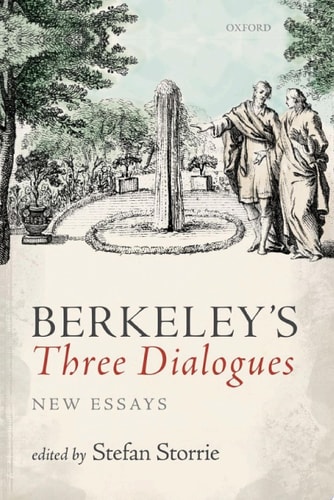
Berkeley's Three Dialogues: New Essays
0
0
As an Amazon Associate and affiliate partner, Menrva Books earns from qualifying purchases. Learn more
Author Description
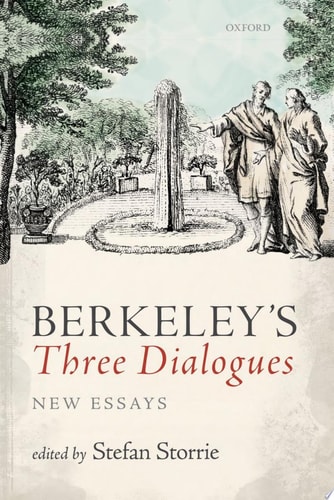
This is the first volume of essays devoted to Berkeley's Three Dialogues between Hylas and Philonous, a classic of early modern philosophy. Leading experts examine all the central issues in Berkeley's work. The Three Dialogues is a dramatization of Berkeley's philosophy in which the two protagonists Hylas and Philonous debate the full range of Berkeleyan themes: the rejection of material substance, the nature of perception and reality, the limits of human knowledge, and his approach to the perceived threats of skepticism, atheism and immorality. When Berkeley presented his first statement of his immaterialist philosophy in the Principles of Human Knowledge three years earlier he was met with incredulity - how could a sane person deny the existence of matter? Berkeley felt that a new approach was needed in order to bring people over to his novel point of view. This new effort was the Three Dialogues. In the preface to the Three Dialogues Berkeley stated that its aim was to "treat more clearly and fully of certain principles laid down” in the Principles. Esteem for Berkeley's work has increased significantly in recent decades, and this volume will be the starting-point for future research.
Menrva's Summary
THE THESIS
This collection of essays investigates the philosophical arguments and rhetorical strategies employed by George Berkeley in his seminal work, Three Dialogues between Hylas and Philonous. Editor Stefan Storrie compiles contributions from leading scholars to analyze how Berkeley refined his immaterialist framework following the initial reception of his earlier Principles of Human Knowledge. The volume serves as a comprehensive examination of Berkeley's defense against skepticism, atheism, and the common-sense belief in material substance.
THE SCOPE MAP
What You Will Find
- Detailed analysis of Berkeley's rejection of material substance.
- Examination of the nature of perception and reality.
- Scholarly discourse on the limits of human knowledge.
- Critical evaluation of the dialogue format as a pedagogical tool.
Scope Limits
- The volume focuses primarily on the Three Dialogues rather than a comprehensive biography of Berkeley.
- It does not provide an introductory overview for absolute beginners without prior exposure to early modern philosophy.
THE AUTHORITY PERSPECTIVE
Experts identify this collection as a foundational resource for contemporary Berkeleyan scholarship. Readers frequently note the academic density of the prose, which is intended for students and researchers already familiar with the primary text.
Page Count:
240
Publication Date:
2018-01-01
Publisher:
OUP Oxford
ISBN-10:
0192538071
ISBN-13:
9780192538079
Philosophy
History & Surveys
Epistemology
Metaphysics
Empiricism
Early Modern
Community Tags
Similar Books