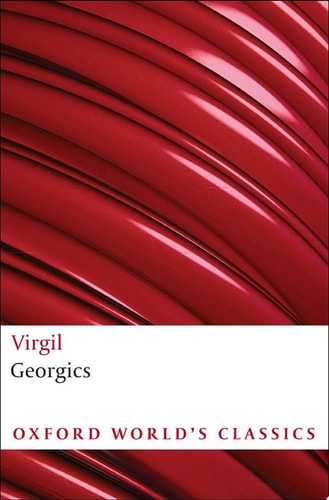
Georgics
0
0
As an Amazon Associate and affiliate partner, Menrva Books earns from qualifying purchases. Learn more
Author Description
'A countryman cleaves earth with his crooked plough. Such is the labour of his life. So he sustains his native land...' Virgil's affectionate poem of the land does not admit brief excerpts, any more than the labour of the farmer can easily be shortened. His verse, descriptive and narrative, brings us the disappointments as well as the rewards of the countryman's year-round devotion to his crops, his vines and olives, livestock great and small, and the complex society of bees. Part agricultural manual, part political poem and allegory, the Georgics' scenes are real and vivid, and the poet-farmer Peter Fallon makes us feel the sights, sounds, and textures of the ancient Italian landscape. 'the combination of truth to the words Virgil wrote, natural vernacular speech and a general at-homeness on the land make Fallon's an inspired translation' Seamus Heaney, Irish Times 'magnificent new translation...Fallon is the perfect translator for the Georgics' Bernard O'Donoghue, Times Literary Supplement ABOUT THE SERIES: For over 100 years Oxford World's Classics has made available the widest range of literature from around the globe. Each affordable volume reflects Oxford's commitment to scholarship, providing the most accurate text plus a wealth of other valuable features, including expert introductions by leading authorities, helpful notes to clarify the text, up-to-date bibliographies for further study, and much more.
Menrva's Summary
THE PULSE
Virgil explores the intricate relationship between the Roman farmer and the land, framing the labor of agriculture as a foundational act of national identity. The poem follows a didactic structure, guiding the reader through the seasonal cycles of crop cultivation, viticulture, arboriculture, and animal husbandry. Virgil balances practical instruction with philosophical reflection, positioning the farmer's struggle against the elements as a microcosm of the Roman state's endurance. The narrative framework utilizes a blend of technical manual and epic verse to elevate the mundane tasks of rural life into a meditation on order, chaos, and the divine.
INSIDE THE PAGES
- Didactic poetic structure focusing on agricultural techniques
- Detailed observations of seasonal cycles and weather patterns
- Allegorical treatment of the Roman political landscape
- Extensive focus on the complex social structure of honeybees
- Vivid descriptions of the ancient Italian rural environment
- Integration of mythological motifs with practical farming advice
- Exploration of the tension between human labor and natural forces
- Emphasis on the moral and spiritual value of agrarian life
THE COLLECTIVE ECHO
Readers and critics frequently discuss the poem's unique position as both a functional agricultural guide and a sophisticated work of political art. Discussion often centers on the tension between the idealized pastoral life and the harsh realities of the labor described by the poet. Scholars highlight the effectiveness of Virgil's imagery in grounding abstract political themes within the tangible textures of the Italian countryside. The work is widely regarded for its rhythmic precision and its ability to transform technical instruction into a profound reflection on the human condition. Many readers find the sections regarding the behavior of bees to be particularly compelling for their blend of scientific observation and metaphorical depth.
Page Count:
149
Publication Date:
2006-01-01
Publisher:
OUP Oxford
ISBN-10:
0191604917
ISBN-13:
9780191604911
Poetry
Nature
Agriculture
English & College Success
English
Classical
Latin poetry
Community Tags
Other Editions(11)
CreateSpace Independent Publishing Platform
2017
Default edition
Independently Published
2017
Oxford University Press
2009
OUP Oxford
2006
Oup Oxford
2006
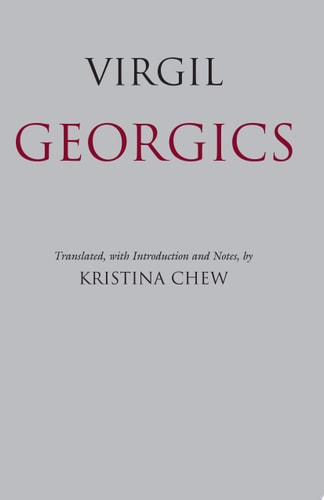
Hackett Publishing
2002
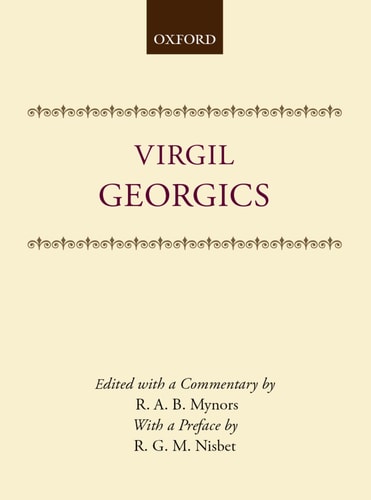
Clarendon Press
1994
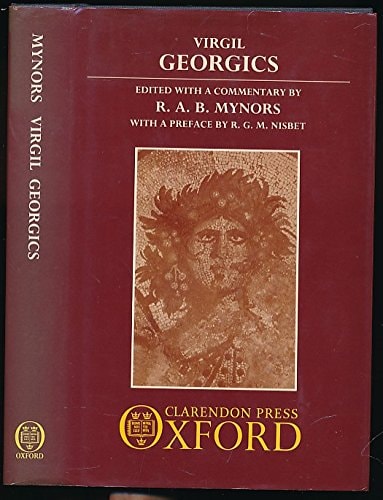
Oxford University Press
1990

Foundation for Classical Reprints
1988

Foundation for Classical Reprints
1986

American Classical College Press
1985
Similar Books
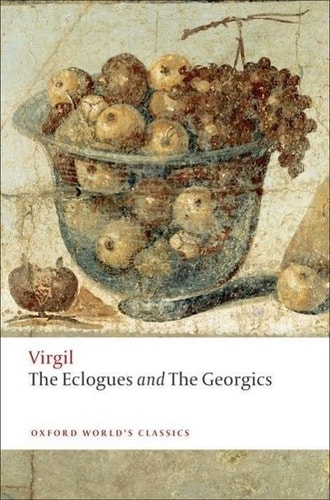

Reader Comments
Share Your Thoughts
No comments yet. Be the first to share your thoughts!