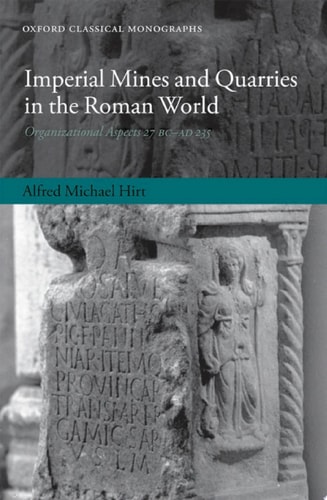
Imperial Mines and Quarries in the Roman World: Organizational Aspects 27 BC-AD 235
0
0
As an Amazon Associate and affiliate partner, Menrva Books earns from qualifying purchases. Learn more
Author Description
The control over marble and metal resources was of major importance to the Roman Empire. The emperor's freedmen and slaves, officers and soldiers of the Roman army, equestrian officials, as well as convicts and free labour were seconded to mines and quarries throughout Rome's vast realm. Alfred Hirt's comprehensive study defines the organizational outlines and the internal structures of the mining and quarrying ventures under imperial control. The themes addressed include: challenges faced by those in charge of these extractive operations; the key figures, their subaltern personnel and their respective responsibilities; the role of the Roman army; the use of civilian partners in quarrying or mining ventures; and the position of the quarrying or mining organizations within the framework of the imperial administration.
Menrva's Summary
THE THESIS
This study investigates the administrative and organizational structures governing imperial mining and quarrying operations during the Roman Principate. Alfred Michael Hirt examines the complex hierarchy of personnel, including freedmen, soldiers, and civilian contractors, to determine how the Roman state maintained control over vital resource extraction across its provinces.
THE SCOPE MAP
What You Will Find
- Analysis of the imperial administrative hierarchy from 27 BC to AD 235
- Examination of labor management involving slaves, convicts, and military personnel
- Case studies on the integration of civilian partners in resource extraction
- Detailed breakdown of the roles played by equestrian officials and army officers
Scope Limits
- The study focuses primarily on the organizational and administrative aspects rather than the technical engineering of extraction
- The geographic scope is limited to the Roman Empire during the specified chronological period
THE AUTHORITY PERSPECTIVE
Scholars recognize this work as a definitive reference for understanding the bureaucratic management of Roman extractive industries. Readers frequently note the academic density of the prose and the meticulous use of primary source evidence to reconstruct imperial administrative practices.
Page Count:
565
Publication Date:
2010-01-01
Publisher:
OUP Oxford
ISBN-10:
0191614408
ISBN-13:
9780191614408
History
Economic History
Industrial history
Archaeology
Ancient History
Ancient - Rome
Community Tags
Similar Books