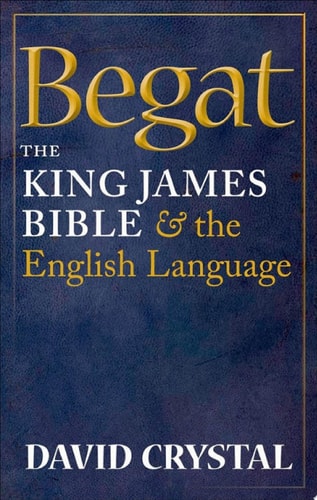
Begat: The King James Bible and the English Language
0
0
As an Amazon Associate and affiliate partner, Menrva Books earns from qualifying purchases. Learn more
Author Description
What do the following have in common? Let there be light - A fly in the ointment - A rod of iron - New wine in old bottles Lick the dust - How are the mighty fallen - Kick against the pricks - Wheels within wheels They are all in the King James Bible. This astonishing book "has contributed far more to English in the way of idiomatic or quasi-proverbial expressions than any other literary source." So wrote David Crystal in 2004. In Begat he returns to the subject not only to consider how a work published in 1611 could have had such influence on the language, but how it can still do so when few regularly hear the Bible and fewer still hear it in the language of Stuart England. No other version of the Bible however popular (such as the Good News Bible) or imposed upon the church (like the New English Bible) has had anything like the same influence. David Crystal shows how its words and phrases have over the centuries found independent life in the work of poets, playwrights, novelists, politicians, and journalists, and how more recently they have been taken up with enthusiasm by advertisers, Hollywood, and hip-hop. Yet the King James Bible owes much to earlier English versions, notably those by John Wycliffe in in the fourteenth century and William Tyndale in the sixteenth. David Crystal reveals how much that is memorable in the King James Bible stems from its forebears. At the same time he shows how crucial were the revisions made by King James's team of translators and editors. "A person who professes to be a critic in the delicacies of the English language ought to have the Bible at his finger's ends," Lord Macaulay advised Lady Holland in 1831. Begat shows how true that remains. It will be a revelation to all who read it.
Menrva's Summary
THE THESIS
This book investigates the profound and enduring influence of the 1611 King James Bible on the development, vocabulary, and idiomatic structure of the English language. David Crystal, a renowned linguist and author, utilizes historical records, literary analysis, and linguistic data to argue that the King James Bible serves as the primary source for many of the most common proverbial expressions in modern English. He examines the collaborative process of the original translators and traces how these phrases migrated from religious texts into secular literature, political discourse, and contemporary media.
THE SCOPE MAP
What You Will Find
- An analysis of the linguistic evolution of English idioms from the 17th century to the present day.
- A comparative study of the King James Bible against its predecessors, specifically the works of John Wycliffe and William Tyndale.
- Evidence of the Bible's influence across diverse mediums including poetry, journalism, advertising, and hip-hop culture.
Scope Limits
- The text does not provide a comprehensive theological analysis of the King James Bible.
- It does not cover the history of non-English translations of the Bible.
THE AUTHORITY PERSPECTIVE
Experts and linguists recognize this work as a meticulous examination of the intersection between religious text and secular language evolution. Readers frequently note the accessible yet scholarly tone that makes complex linguistic history understandable for a general audience.
Page Count:
327
Publication Date:
2010-01-01
Publisher:
OUP Oxford
ISBN-10:
0191612995
ISBN-13:
9780191612992
History
Religion
Linguistics
English & College Success
Literary Criticism
Etymology
English
Bible versions
Community Tags
Similar Books