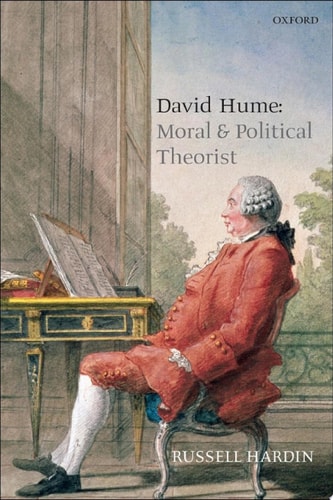
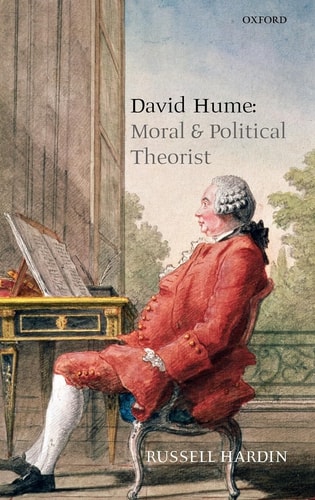
David Hume: Moral and Political Theorist
0
0
As an Amazon Associate and affiliate partner, Menrva Books earns from qualifying purchases. Learn more
Author Description
Russell Hardin presents a new explication of David Hume's moral and political theory. With Hume, he holds that our normative views can be scientifically explained but they cannot be justified as true. Hume argued for the psychological basis of such views. In particular, he argued for sympathy as the mirroring of the psychological sensations and emotions of others. By placing Hume in the developing tradition of social science, as a strong forerunner of his younger friend Adam Smith, Hardin demonstrates Hume's strong strategic sense, his nascent utilitarianism, his powerful theory of convention as a main source of social and political order, and his recognition of moral and political theory as a single enterprise.
Menrva's Summary
THE THESIS
This work investigates the core question of whether normative moral and political views can be scientifically explained despite their lack of objective justification. Russell Hardin, a scholar of political theory, utilizes Hume's writings to argue that moral and political systems are rooted in psychological mechanisms rather than absolute truths. By situating Hume within the early social science tradition, Hardin posits that Hume's theories on sympathy and convention serve as the foundation for modern utilitarian thought.
THE SCOPE MAP
What You Will Find
- Analysis of Hume's theory of sympathy as a psychological mirroring mechanism
- Examination of convention as the primary driver of social and political order
- Comparison of Hume's strategic thinking with that of Adam Smith
- Integration of moral and political theory into a unified framework
Scope Limits
- Does not provide a comprehensive biography of Hume's life
- Does not address Hume's epistemological works outside of their moral and political implications
THE AUTHORITY PERSPECTIVE
Scholars frequently note the analytical rigor Hardin applies to Hume's strategic reasoning. Experts highlight this text as a significant contribution to understanding the intersection of historical philosophy and contemporary social science methodology.
Page Count:
273
Publication Date:
2009-01-01
Publisher:
OUP Oxford
ISBN-10:
0191610135
ISBN-13:
9780191610134
Philosophy
Philosophy history
Philosophers scotland
Ethics
Social Science
Community Tags
Other Editions(3)

Similar Books