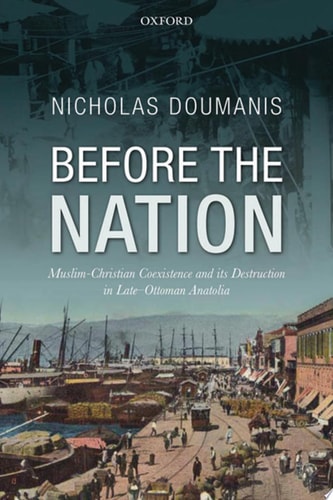
Before the Nation: Muslim-Christian Coexistence and Its Destruction in Late-Ottoman Anatolia
0
0
As an Amazon Associate and affiliate partner, Menrva Books earns from qualifying purchases. Learn more
Author Description
It Is Common For Survivors Of Ethnic Cleansing And Even Genocide To Speak Nostalgically About Earlier Times Of Intercommunal Harmony And Brotherhood. After Being Driven From Their Anatolian Homelands, Greek Orthodox Refugees Insisted That They Lived Well With The Turks, And Yearned For The Days When They Worked And Drank Coffee Together, Participated In Each Others Festivals, And Even Prayed To The Same Saints. Historians Have Never Showed Serious Regard To Thesememories, Given The Refugees Had Fled From Horrific Ethnic Violence That Appeared To Reflect Deep-seated And Pre-existing Animosities. Refugee Nostalgia Seemed Pure Fantasy; Perhaps Contrived To Lessen The Pain And Humiliations Of Displacement.before The Nation Argues That There Is More Than A Grain Of Truth To These Nostalgic Traditions. It Points To The Fact That Intercommunality, A Mode Of Everyday Living Based On The Accommodation Of Cultural Difference, Was A Normal And Stabilizing Feature Of Multi-ethnic Societies. Refugee Memory And Other Ethnographic Sources Provide Ample Illustration Of The Beliefs And Practices Associated With Intercommunal Living, Which Local Muslims And Christian Communities Likened To A Commonmoral Environment. Drawing Largely From An Oral Archive Containing Interviews With Over 5000 Refugees, Nicholas Doumanis Examines The Mentalities, Cosmologies, And Value Systems As They Relate To Cultures Of Coexistence. He Furthermore Rejects The Commonplace Assumption That The Empire Was Destroyed By Intercommunal Hatreds. Doumanis Emphasizes The Role Of State-perpetrated Political Violence Which Aimed To Create Ethnically Homogenous Spaces, And Which Went Some Way In Transforming These Anatolians Into Greeksand Turks.
Menrva's Summary
THE THESIS
This work investigates whether the nostalgic memories of intercommunal harmony among Greek Orthodox refugees from Anatolia reflect historical reality or merely a coping mechanism for the trauma of displacement. Nicholas Doumanis, a historian specializing in modern Greek and Mediterranean history, utilizes a massive oral archive of over 5,000 refugee interviews to challenge the conventional historiography of the late Ottoman period. He argues that intercommunality was a functional, stabilizing social norm rather than a myth, and that the collapse of this society was driven by state-sponsored political violence rather than inherent ethnic animosity.
THE SCOPE MAP
What You Will Find
- Analysis of oral history archives containing testimonies from over 5,000 Greek Orthodox refugees.
- Examination of shared cultural practices, religious syncretism, and social values in late-Ottoman Anatolia.
- A critique of nationalist historiography regarding the transition from empire to nation-state.
Scope Limits
- The study focuses primarily on the perspective of Greek Orthodox refugees and does not provide an exhaustive account of all minority groups within the Ottoman Empire.
- The work does not attempt to provide a comprehensive military or diplomatic history of the period, focusing instead on social mentalities and local coexistence.
THE AUTHORITY PERSPECTIVE
Scholars recognize this text as a significant contribution to the study of ethnic violence and the utility of oral history in reconstructing subaltern experiences. Readers frequently note the academic density of the prose, which demands a high level of engagement with the author's theoretical framework regarding social memory and state-building.
Page Count:
246
Publication Date:
2012-01-01
Publisher:
Oxford University Press, Incorporated
ISBN-10:
0191638021
ISBN-13:
9780191638022
History
Ethnic Conflict
Social Conditions
Christianity and other religions
European History
Ottoman Empire
Middle Eastern
Islam
Oral History
Ethnic relations
Eastern Orthodox
Greeks
Sociology
Social Life
Community Tags
Similar Books