Comparative Ecology
0
0
As an Amazon Associate and affiliate partner, Menrva Books earns from qualifying purchases. Learn more
Author Description
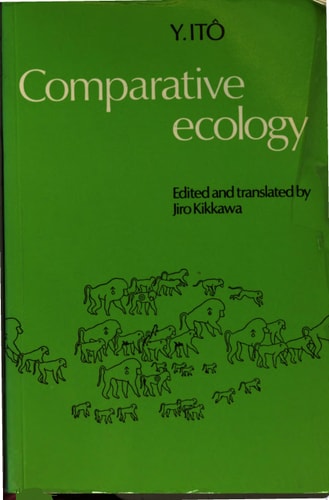
This 1980 book considers the patterns of population fluctuations of animals and intraspecific social relations by means of comparative methods and discusses the evolution of population regulation mechanisms and social relations. The author proposes that parental care has evolved in environments in which it is difficult for the young to obtain food, whilst high fecundity has evolved in the opposite environment. He presents evidence from a wide range of organisms to argue that during evolution animals repeatedly face the 'choice' of two strategies - low fecundity combined with parental protection, or high fecundity - and that this choice determined the amplitude, regularity and associated main factors of population fluctuations as well as the main characteristics of social relations as expressed in group life or dispersed living involving territory. Although many examples are drawn from insects, with which the author is most familiar, mammal, birds and other animal groups are also examined in depth.
Menrva's Summary
THE THESIS
This book investigates the evolutionary strategies animals employ to regulate their populations and social structures. The author, Y. Itō, utilizes comparative methods to analyze patterns in animal population fluctuations and intraspecific social relations, proposing a fundamental evolutionary choice between low fecundity with parental care and high fecundity. This choice, Itō argues, dictates population dynamics, regularity, and the nature of social organization, whether solitary or group-based. Evidence is drawn from a broad spectrum of organisms, with a particular focus on insects, but also including mammals and birds, to support these evolutionary theses.
THE SCOPE MAP
- Analysis of population fluctuation patterns across diverse animal species.
- Examination of intraspecific social relations and their evolutionary basis.
- Discussion of the evolution of population regulation mechanisms.
- Proposal of two primary evolutionary strategies: low fecundity with parental care vs. high fecundity.
- Evidence presented from insects, mammals, birds, and other animal groups.
- Exploration of how evolutionary strategy influences population dynamics (amplitude, regularity).
- Investigation into the characteristics of social relations (group living vs. dispersed living).
THE AUTHORITY PERSPECTIVE
This 1980 book offers a comparative ecological perspective on animal population regulation and social relations. The author's central thesis posits that evolutionary choices between high and low fecundity strategies, linked to parental care or its absence, fundamentally shape population dynamics and social structures. The work draws on a wide array of animal examples, particularly insects, to support its arguments regarding the evolution of these traits. The book's detailed examination of these interconnected evolutionary pressures provides a framework for understanding diverse animal life histories.
Page Count:
448
Publication Date:
1981-03-12
Publisher:
CUP Archive
ISBN-10:
0521229774
ISBN-13:
9780521229777
Non-Fiction
Science
Evolutionary Biology
Ecology
Community Tags
Similar Books