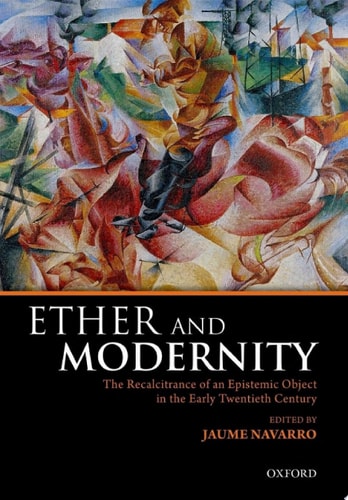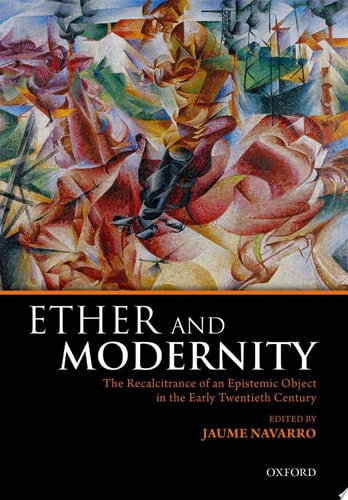
Ether and Modernity
0
0
As an Amazon Associate and affiliate partner, Menrva Books earns from qualifying purchases. Learn more
Author Description
Ether And Modernity Offers A Snapshot Of The Status Of An Epistemic Object, The Ether (or Aether), In The Early Twentieth Century. The Contributed Papers Show That The Ether Was Often Regarded As One Of The Objects Of Modernity, Hand In Hand With The Electron, Radioactivity Or X-rays, And Not Simply As The Stubborn Residue Of An Old-fashioned, Long-discarded Science. The Prestige And Authority Of Scientists And Popularisers Like Oliver Lodge And Arthur Eddington In Britain, Phillip Lenard In Germany Or Dayton C. Miller In The Usa Was Instrumental In The Preservation, Defence Or Even Re-emergence Of The Ether In The 1920s. Moreover, The Consolidation Of Wireless Communications And Radio Broadcasting, Indeed A Very Modern Technology, Brought The Ether Into Audiences That Would Otherwise Never Have Heard About Such An Esoteric Entity. The Ether Also Played A Pivotal Role Among Some Artists In The Early Twentieth Century: The Values Of Modernism Found In The Complexities And Contradictions Of Modern Physics, Such As Wireless Action Or Wave-particle Puzzles, A Fertile Ground For The Development Of New Artistic Languages; In Literature As Much As In The Pictorial And Performing Arts. Essays On The Intellectual Foundations Of Umberto Boccioni's Art, The Linguistic Techniques Of Lodge, And Ernst Mach's Considerations On Aesthetics And Physics Witness To The Imbricate Relationship Between The Ether And Modernism. Last But Not Least, The Ether Played A Fundamental Part In The Resurgence Of Modern Spiritualism In The Aftermath Of The Great War. This Book Examines The Complex Array Of Meanings, Strategies And Milieus That Enabled The Ether To Remain An Active Part In Scientific And Cultural Debates Well Into The 1930s, But Not Beyond. This Portrait May Be Easily Regarded As The Swan Song Of An Epistemic Object That Was Soon To Fade Away As Shown By Paul Dirac's Unsuccessful Attempt To Resuscitate Some Kind Of Aether In 1951, With Which This Book Finishes.
Menrva's Summary
THE THESIS
How did the concept of the ether persist as a significant epistemic object within scientific and cultural discourse during the early twentieth century? Editor Jaume Navarro compiles a series of scholarly essays that examine the ether not as a discarded relic, but as a dynamic component of modernity. By analyzing the work of prominent physicists, the rise of wireless technology, and the influence of spiritualism, the contributors argue that the ether remained a central, contested entity in both scientific and artistic circles until the 1930s.
THE SCOPE MAP
What You Will Find
- Historical analysis of the ether's role in early 20th-century physics and communication technology.
- Case studies on figures such as Oliver Lodge, Arthur Eddington, and Dayton C. Miller.
- Exploration of the intersection between physics, modernism, and artistic expression.
- Examination of the link between the ether and the resurgence of spiritualism post-World War I.
Scope Limits
- The text focuses primarily on the period between the early 1900s and the 1930s.
- It does not provide a comprehensive history of the ether prior to the twentieth century.
THE AUTHORITY PERSPECTIVE
Scholars and historians of science recognize this collection as a nuanced investigation into the persistence of obsolete scientific concepts. Readers frequently note the academic density of the prose, which is best suited for those with a background in the history of science or modernism.
Page Count:
272
Publication Date:
2018-01-01
Publisher:
Oxford University Press
ISBN-10:
0192517791
ISBN-13:
9780192517791
Science History
Modernism
Physics
Philosophy of
Community Tags
Similar Books