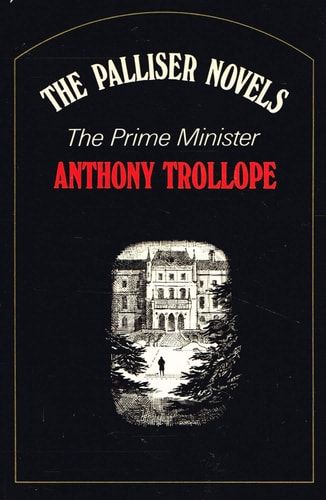
The Prime Minister
0
0
As an Amazon Associate and affiliate partner, Menrva Books earns from qualifying purchases. Learn more
Author Description
Plantaganet Palliser, Prime Minister of England - a man of power and prestige, with all the breeding and inherited wealth that goes with it - is appalled at the inexorable rise of Ferdinand Lopez. An exotic impostor, seemingly from nowhere, Lopez has society at his feet, while well-connected ladies vie with each other to exert influence on his behalf - even Palliser's own wife, Lady Glencora. But when the interloper makes a socially advantageous marriage, Palliser must decide whether to stand by his wife's support for Lopez in a by-election or leave him to face exposure as a fortune-hunting adventurer. A novel of social, sexual and domestic politics, The Prime Minister raises one of the most enduring questions in government - whether a morally scrupulous gentleman can make an effective leader.
Menrva's Summary
THE PULSE
The integrity of a principled statesman is tested when an ambitious social climber threatens the stability of his political and domestic spheres. Plantagenet Palliser, the newly appointed Prime Minister, struggles to reconcile his rigid moral code with the pragmatic demands of governing a nation and managing his wife's social entanglements. As Ferdinand Lopez, a charismatic and mysterious outsider, maneuvers through the upper echelons of society, he creates a friction that forces Palliser to confront the limits of his own influence. The narrative employs a third-person omniscient perspective to examine the intersection of public duty and private character within the rigid hierarchy of Victorian England.
INSIDE THE PAGES
- Detailed exploration of parliamentary procedure and political maneuvering
- Examination of the social dynamics governing Victorian marriage and status
- Contrast between the stoic, principled protagonist and the opportunistic antagonist
- Analysis of the influence of wealth and pedigree on political success
- Portrayal of the complex, often strained relationship between a husband and wife in the public eye
- Satirical commentary on the superficiality of high-society circles
- Focus on the psychological toll of leadership and public scrutiny
- Use of multi-layered subplots to reflect broader societal shifts
THE COLLECTIVE ECHO
Readers and critics frequently highlight the novel's meticulous attention to the nuances of Victorian political life and the internal conflicts of its protagonist. Discussion often centers on the effectiveness of Trollope's characterization, particularly the contrast between the honorable Palliser and the manipulative Lopez. Many observers note that the pacing is deliberate, favoring character development and social observation over rapid plot progression. The work is often cited for its enduring relevance regarding the challenges of maintaining moral consistency while navigating the complexities of power. Readers frequently appreciate the depth of the domestic subplots, which provide a necessary counterpoint to the more formal political discourse found throughout the text.
Page Count:
396
Publication Date:
1983-01-01
Publisher:
Oxford University Press
ISBN-10:
0192546155
ISBN-13:
9780192546159
Historical Fiction
London England
England
Classic Literature
Victorian
Political fiction
Social Satire
Community Tags
Other Editions(22)
BoD - Books on Demand
2023
Default edition
Creative Media Partners, LLC
2022
Murat Uhrayoglu E Kitap Projesi
2019
CreateSpace Independent Publishing Platform
2018
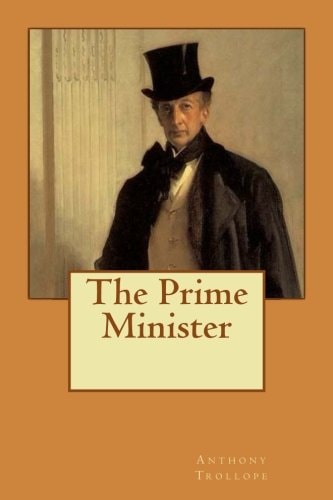
CreateSpace Independent Publishing Platform
2017

CreateSpace Independent Publishing Platform
2016

CreateSpace Independent Publishing Platform
2015

Creative Media Partners, LLC
2015

CreateSpace Independent Publishing Platform
2015

CreateSpace Independent Publishing Platform
2015

Classic Books
2013
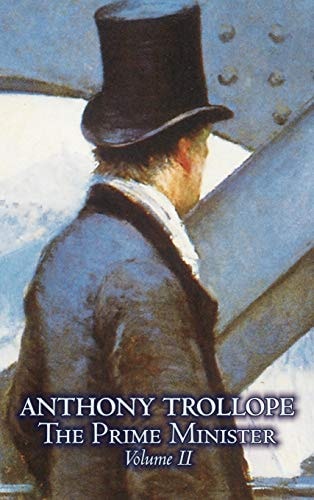
Alan Rodgers Books
2011
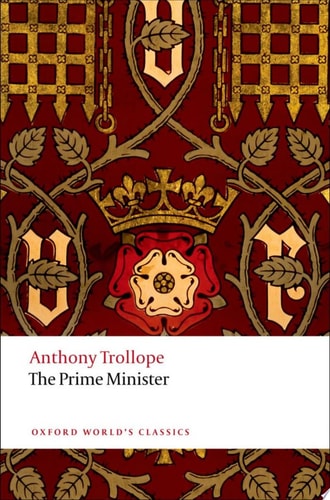
Oup Oxford
2011

OUP Oxford
2011

Cambridge Scholars Publishing
2009

NuVision Publications
2004

Classic Books
2001

Random House Audiobooks
1997

Books On Tape
1996
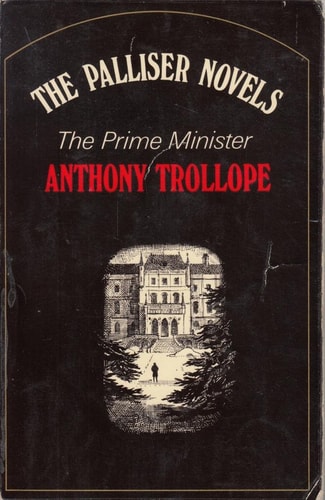
Oxford University Press
1985
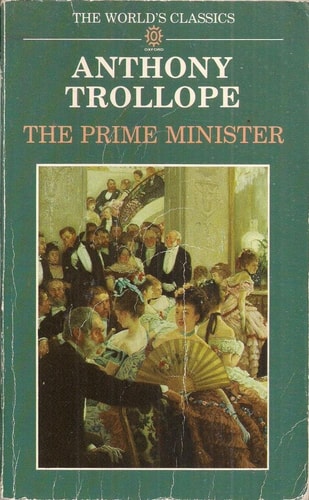
Oxford University Press
1984
Oxford University Press
1983
Similar Books






Reader Comments
Share Your Thoughts
No comments yet. Be the first to share your thoughts!