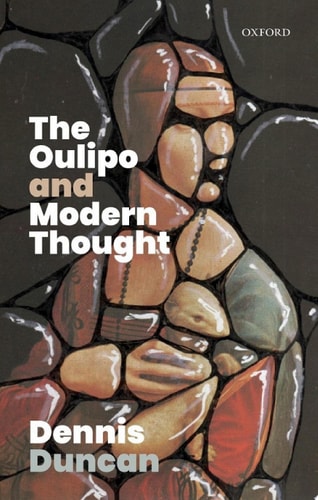
The Oulipo and Modern Thought
0
0
As an Amazon Associate and affiliate partner, Menrva Books earns from qualifying purchases. Learn more
Author Description
The impact of the Oulipo (Ouvroir de Littérature Potentielle), one of the most important groups of experimental writers of the late twentieth century, is still being felt in contemporary literature, criticism, and theory, both in Europe and the US. Founded in 1960 and still active today, this Parisian literary workshop has featured among its members such notable writers as Italo Calvino, Georges Perec, and Raymond Queneau, all sharing in its light-hearted, slightly boozy bonhomie, the convivial antithesis of the fractious, volatile coteries of the early twentieth-century avant-garde. For the last fifty years the Oulipo has undertaken the same simple goal: to investigate the potential of 'constraints' in the production of literature--that is, formal procedures such as anagrams, acrostics, lipograms (texts which exclude a certain letter), and other strange and complex devices. Yet, far from being mere parlour games, these methods have been frequently used as part of a passionate--though sometimes satirical--involvement with the major intellectual currents of the mid-twentieth century. Structuralism, psychoanalysis, Surrealism, analytic philosophy: all come under discussion in the group's meetings, and all find their way in the group's exercises in ways that, while often ironic, are also highly informed. Using meeting minutes, correspondence, and other material from the Oulipo archive at the Bibliothèque nationale de France, The Oulipo and Modern Thought shows how the group have used constrained writing as means of puckish engagement with the debates of their peers, and how, as the broader intellectual landscape altered, so too would the group's conception of what constrained writing can achieve.
Menrva's Summary
THE THESIS
How did the Oulipo group utilize constrained writing as a serious intellectual instrument to engage with the major philosophical and literary currents of the twentieth century? Dennis Duncan, a scholar of modern literature, examines the Oulipo's history through the lens of their archival records, including meeting minutes and personal correspondence. He argues that the group's formal experiments were not merely aesthetic exercises, but rather sophisticated responses to structuralism, psychoanalysis, and analytic philosophy. The book demonstrates that the group's commitment to constraints functioned as a method of critical inquiry into the nature of language and thought.
THE SCOPE MAP
What You Will Find
- Analysis of Oulipo's interaction with structuralism, Surrealism, and psychoanalysis.
- Examination of specific formal constraints such as lipograms, anagrams, and acrostics.
- Historical context of the group's formation in 1960 and its evolution over fifty years.
- Utilization of primary source materials from the Bibliothèque nationale de France.
Scope Limits
- The text focuses primarily on the intellectual history of the group rather than providing a comprehensive biography of every individual member.
- It does not serve as a manual for creative writing, but rather as a historical and theoretical study of the group's methodology.
THE AUTHORITY PERSPECTIVE
Scholars and critics recognize this work as a significant contribution to the study of experimental literature and the history of the avant-garde. Readers frequently note the academic density of the prose, which provides a rigorous examination of the intersection between formal constraint and intellectual history.
Page Count:
185
Publication Date:
2019-01-01
Publisher:
OUP Oxford
ISBN-10:
0192567438
ISBN-13:
9780192567437
Intellectual History
English & College Success
European
English
Structuralism
Literary Criticism
Modernism
Community Tags
Similar Books