Zoo Conservation Biology
0
0
As an Amazon Associate and affiliate partner, Menrva Books earns from qualifying purchases. Learn more
Author Description
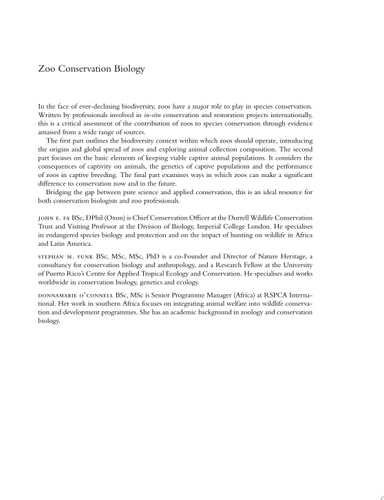
In the face of ever-declining biodiversity, zoos have a major role to play in species conservation. Written by professionals involved in in situ conservation and restoration projects internationally, this is a critical assessment of the contribution of zoos to species conservation through evidence amassed from a wide range of sources. The first part outlines the biodiversity context within which zoos should operate, introducing the origins and global spread of zoos and exploring animal collection composition. The second part focuses on the basic elements of keeping viable captive animal populations. It considers the consequences of captivity on animals, the genetics of captive populations and the performance of zoos in captive breeding. The final part examines ways in which zoos can make a significant difference to conservation now and in the future. Bridging the gap between pure science and applied conservation, this is an ideal resource for both conservation biologists and zoo professionals.
Menrva's Summary
THE THESIS
This book critically assesses the role of zoos in species conservation amidst declining biodiversity. Written by professionals actively engaged in international in situ conservation and restoration projects, it provides an evidence-based evaluation of zoo contributions. The text first establishes the biodiversity context for zoos, tracing their origins and global spread while examining collection compositions. It then delves into the fundamental aspects of maintaining viable captive animal populations, considering the impacts of captivity, population genetics, and captive breeding performance. Finally, the book explores how zoos can significantly contribute to conservation efforts both presently and in the future, acting as a bridge between scientific research and applied conservation practices.
THE SCOPE MAP
- The biodiversity context within which zoos operate.
- Origins and global spread of zoos.
- Analysis of animal collection composition.
- Basic elements of keeping viable captive animal populations.
- Consequences of captivity on animals.
- Genetics of captive populations.
- Performance of zoos in captive breeding.
- Strategies for zoos to make a significant difference to conservation.
THE AUTHORITY PERSPECTIVE
This work is positioned as an ideal resource for both conservation biologists and zoo professionals, aiming to bridge the gap between pure science and applied conservation. Its comprehensive approach, drawing on evidence from a wide range of sources, suggests a thorough and authoritative examination of the subject. The book's structure, moving from the broader biodiversity context to specific captive population management and future conservation strategies, indicates a logical and progressive flow of information. The authors' direct involvement in conservation projects lends credibility to their critical assessment of zoo contributions.
Page Count:
358
Publication Date:
2011-08-18
Publisher:
Cambridge University Press
ISBN-10:
1139498622
ISBN-13:
9781139498623
Science
Non-Fiction
Wildlife conservation
Zoology
Conservation Biology
Biodiversity
Community Tags
Similar Books