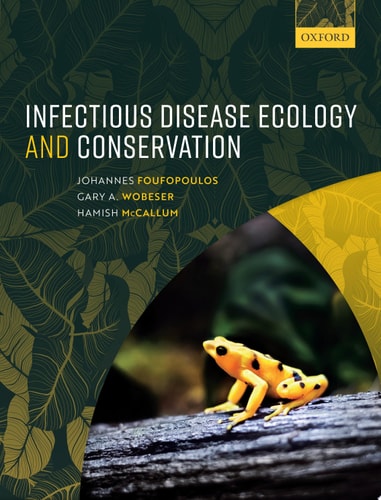
Infectious Disease Ecology and Conservation
0
0
As an Amazon Associate and affiliate partner, Menrva Books earns from qualifying purchases. Learn more
Author Description
Emerging infectious diseases pose an increasingly serious threat to a number of endangered or sensitive species and are increasingly recognized as one of the major factors driving species extinction. Despite the significant impact of pathogens on conservation, no single book has yet integrated the theoretical principles underlying disease transmission with the practical health considerations for helping wildlife professionals and conservation biologists to manage disease outbreaks and conserve biodiversity. This novel and accessible book starts with a foundational section focusing on the role of pathogens in natural ecosystems, the dynamics of transmission in different environments, and the factors driving wildlife disease outbreaks. It then moves on to more applied issues concerned with the acquisition of field data including sampling, experimental design and analysis, as well as diagnostic analyses in both the laboratory and field. Guidelines for effective modelling and data analysis follow, before a final section is devoted to disease prevention and control including the prevention of novel outbreaks, the use of diseases as biocontrol agents, and the associated issues of ethics, public communication, and outreach. Infectious Disease Ecology and Conservation is primarily aimed at advanced undergraduates, graduate students, and established researchers in the fields of conservation biology, disease ecology, population ecology, and veterinary science. It will also be a valuable reference for conservation practitioners, land managers, and wildlife professionals who are required to deal with disease outbreak problems.
Menrva's Summary
THE THESIS
This book investigates the intersection of disease transmission theory and practical wildlife management to address the growing threat of infectious diseases to endangered species. The authors, Gary A. Wobeser, Hamish McCallum, and Johannes Foufopoulos, synthesize ecological principles with field-based diagnostic and analytical methodologies. By bridging the gap between theoretical ecology and applied conservation, the text provides a framework for managing outbreaks and mitigating the impact of pathogens on biodiversity.
THE SCOPE MAP
What You Will Find
- Theoretical principles of pathogen transmission in natural ecosystems
- Methodologies for field data acquisition, sampling, and experimental design
- Guidelines for disease modelling and statistical analysis
- Strategies for disease prevention, control, and public communication
Scope Limits
- Does not provide exhaustive clinical diagnostic manuals for every specific wildlife species
- Does not cover human-centric public health policy beyond its relevance to wildlife conservation
THE AUTHORITY PERSPECTIVE
Experts identify this work as a foundational text for bridging the gap between academic disease ecology and field-based conservation practice. Readers frequently note the balance between rigorous theoretical modeling and the practical, actionable advice provided for wildlife professionals and land managers.
Page Count:
288
Publication Date:
2022-01-01
Publisher:
OUP Oxford
ISBN-10:
0192563548
ISBN-13:
9780192563545
Science
Epidemiology
Ecology
Zoology
Veterinary science
Conservation Biology