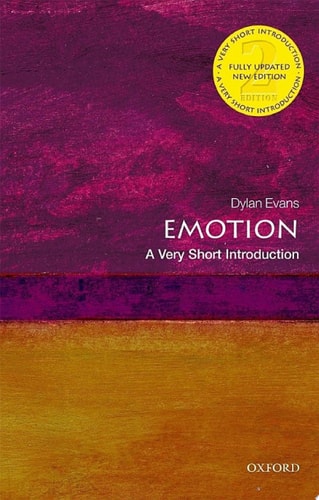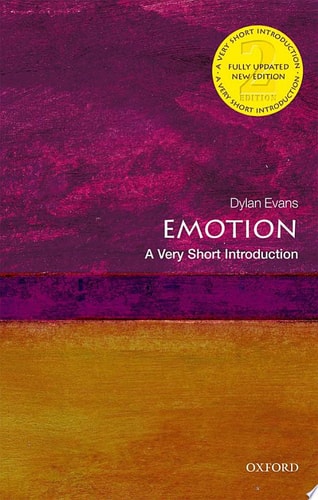
Emotion: A Very Short Introduction
0
0
As an Amazon Associate and affiliate partner, Menrva Books earns from qualifying purchases. Learn more
Author Description
Was Love Invented By European Poets In The Middle Ages Or Is It Part Of Human Nature? Will Winning The Lottery Really Make You Happy? Is It Possible To Build Robots That Have Feelings? In This Very Sort Introduction Dylan Evans Explores These And Many Other Intriguing Questions In This Guide To The Latest Thinking About The Emotions. Drawing On A Wide Range Of Scientific Research, From Anthropology And Psychology To Neuroscience And Artificial Intelligence, Evans Takes The Reader On A Fascinating Journey Into The Human Heart, Discussing The Evolution Of Emotions And Their Biological Basis, The Science Of Happiness, And The Role That Emotions Play In Memory And Decision Making. Greeted By Critics As A Pop Science Classic When It Was First Published In 2001, The Book Has Now Been Thoroughly Revised And Updated To Incorporate New Developments In Our Understanding Of Emotions, Including New Sections Addressing The Neural Basis Of Empathy And The Emotional Impact Of Films. About The Series: The Very Short Introductions Series From Oxford University Press Contains Hundreds Of Titles In Almost Every Subject Area. These Pocket-sized Books Are The Perfect Way To Get Ahead In A New Subject Quickly. Our Expert Authors Combine Facts, Analysis, Perspective, New Ideas, And Enthusiasm To Make Interesting And Challenging Topics Highly Readable.
Menrva's Summary
THE THESIS
This book investigates the biological, evolutionary, and psychological foundations of human emotion to determine whether feelings are universal adaptations or cultural constructs. Dylan Evans, a researcher with expertise in evolutionary psychology and philosophy, synthesizes data from anthropology, neuroscience, and artificial intelligence to construct a framework for understanding how emotions function in decision-making, memory, and social interaction. The text evaluates the scientific consensus on the nature of happiness and the potential for synthetic emotional intelligence in machines.
THE SCOPE MAP
What You Will Find
- Evolutionary theories regarding the biological basis of human emotions
- Analysis of the relationship between emotional states and cognitive processes like memory
- Examination of the neural mechanisms underlying empathy
- Discussion on the intersection of artificial intelligence and emotional simulation
Scope Limits
- Does not provide a comprehensive clinical guide to emotional disorders or psychotherapy
- Does not offer an exhaustive historical survey of emotional expression in literature or art
THE AUTHORITY PERSPECTIVE
Critics and academics frequently cite this work as a concise, accessible entry point for understanding complex psychological concepts. Readers often note that the prose maintains a high level of clarity despite the density of the scientific research presented.
Page Count:
152
Publication Date:
2019-01-01
Publisher:
Oxford University Press
ISBN-10:
0192571230
ISBN-13:
9780192571236
Psychology
Philosophy
Non-Fiction
Science
Neuroscience