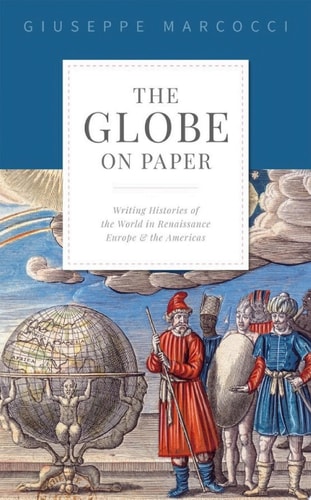
The Globe on Paper: Writing Histories of the World in Renaissance Europe and the Americas
0
0
As an Amazon Associate and affiliate partner, Menrva Books earns from qualifying purchases. Learn more
Author Description
The age of exploration exposed the limits of available universal histories. Everyday interactions with cultures and societies across the globe brought to light a multiplicity of pasts which proved difficult to reconcile with an emerging sense of unity in the world. Among the first to address the questions posed by this challenge were a handful of Renaissance historians. On what basis could they narrate the history of hitherto unknown peoples? Why did the Bible and classical works say nothing about so many visible traces of ancient cultures? And how far was it possible to write histories of the world at a time of growing religious division in Europe and imperial rivalry around the world? A study of the cross-fertilization of historical writing in the sixteenth and early seventeenth centuries, The Globe on Paper reconstructs a set of imaginative accounts worked out from Mexico to the Moluccas and Peru, and from the shops of Venetian printers to the rival courts of Spain and England. The pages of this book teem with humanists, librarians, missionaries, imperial officials, as well as forgers and indigenous chroniclers. Drawing on information gathered--or said to have been gathered--from eyewitness reports, interviews with local inhabitants, ancient codices, and material evidence, their global narratives testify to an unprecedented broadening of horizons which briefly flourished before succumbing to the forces of imperial and religious reaction.
Menrva's Summary
THE THESIS
How did Renaissance historians reconcile the discovery of new global cultures with traditional biblical and classical historical frameworks? Giuseppe Marcocci, a specialist in early modern history, examines the intellectual crisis triggered by the age of exploration. He argues that sixteenth and seventeenth-century historians faced a fundamental challenge in integrating non-European pasts into a coherent, unified narrative of the world amidst intense religious and imperial conflict.
THE SCOPE MAP
What You Will Find
- Analysis of historical writing across Europe, Mexico, Peru, and the Moluccas
- Examination of the roles of humanists, missionaries, and indigenous chroniclers
- Investigation into the use of eyewitness reports, oral interviews, and material evidence
Scope Limits
- The study focuses primarily on the sixteenth and early seventeenth centuries
- It does not provide an exhaustive survey of all global historical traditions, focusing instead on the European-led effort to synthesize global history
THE AUTHORITY PERSPECTIVE
Scholars recognize this work as a significant contribution to the study of early modern historiography and the intellectual history of the colonial era. Readers frequently note the meticulous archival research and the author's ability to synthesize complex, disparate accounts into a cohesive narrative of global intellectual development.
Page Count:
224
Publication Date:
2020-01-01
Publisher:
OUP Oxford
ISBN-10:
0192589571
ISBN-13:
9780192589576
History
European History
Early Modern
Civilization
Global History
Historiography
Community Tags
Similar Books