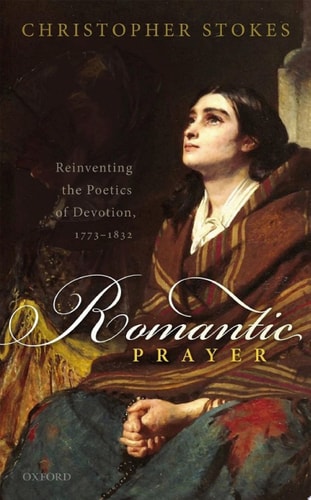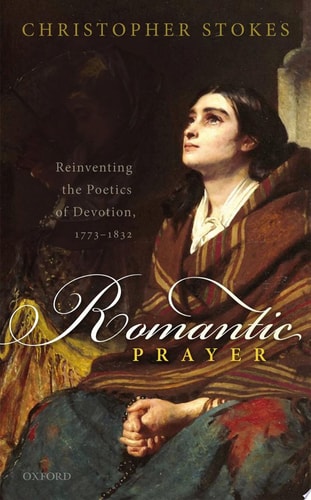
Romantic Prayer
0
0
As an Amazon Associate and affiliate partner, Menrva Books earns from qualifying purchases. Learn more
Author Description
Whilst Religion And The Secular Have Been Continually Debated Contexts For Literature Of The Romantic Era, The Dominant Scholarly Focus Has Been On Doctrines And Denominations. In Analysing The Motif Of Devotion, Romantic Prayer Shifts Attention To The Quintessential Articulation Of Religion As Lived Experience, As Practice, And As A Performative Rather Than Descriptive Phenomenon. In An Era When The Tenability And Rationality Of Prayer Was Much Contested, Poetry—a Form With Its Own Interlinked History With Prayer—was A Unique Place To Register What Prayer Meant In Modernity. This Study Illustrates How The Discourse Of Prayer Continually Intervened In The Way That Poetic Practices Evolved And Responded To The Religious And Secular Questions Of The Eighteenth And Nineteenth-century Moment. After Laying Out The Details Of Prayer's Historical Position In The Romantic Era Across A Spread Of Religious Traditions, Romantic Prayer Turns To A Range Of Writers, From The Identifiably Religious To The Staunchly Sceptical. William Cowper And Anna Letitia Barbauld Are Shown To Use Poetry To Reflect And Reinvent The Ideals Of Prayer Inherited From Their Own Denominational Histories. Samuel Taylor Coleridge's Work Is Analysed As Part Of A Long Engagement With The Rationality Of Prayer, Culminating In An Explicit 'philosophy' Of Prayer; William Wordsworth—by Contrast—keeps Prayer At An Aesthetic Distance, Continually Alluding To Prayerful Language But Rarely Committing To Devotional Voice Itself. John Keats, Percy Bysshe Shelley, And Lord Byron Are Treated In The Context Of Departing From Christianity, Under The Influence Of Enlightenment, Materialist, And Atheist Critiques—what Happens To Prayer In Poetry When Prayer As A Language Traditionally Conceived Is Becoming Impossible To Maintain?
Menrva's Summary
THE THESIS
This study investigates how the act of prayer functioned as a performative and lived experience within the poetry of the Romantic era, rather than merely as a doctrinal or denominational expression. Christopher Stokes, an academic scholar, examines the intersection of religious practice and poetic form during the eighteenth and nineteenth centuries. By analyzing a diverse range of authors, the book argues that poetry served as a unique site for negotiating the tensions between religious tradition and the emerging secular skepticism of the modern age.
THE SCOPE MAP
What You Will Find
- Historical analysis of prayer across various religious traditions in the Romantic period
- Comparative studies of poets including William Cowper, Anna Letitia Barbauld, Samuel Taylor Coleridge, and William Wordsworth
- Examination of the shift in prayer-related language among skeptical poets like John Keats, Percy Bysshe Shelley, and Lord Byron
Scope Limits
- The study does not provide a comprehensive survey of all religious literature of the era
- The analysis focuses primarily on the intersection of poetic form and devotional practice rather than broad theological history
THE AUTHORITY PERSPECTIVE
Experts identify this work as a significant contribution to the study of Romantic-era religious discourse and poetic innovation. Readers frequently note the academic density of the prose and the precision with which Stokes navigates the complex relationship between faith and secularization.
Page Count:
272
Publication Date:
2021-01-01
Publisher:
Oxford University Press
ISBN-10:
0192599658
ISBN-13:
9780192599650
Poetry
Literary Criticism
History of Ideas
Romanticism
Community Tags
Similar Books