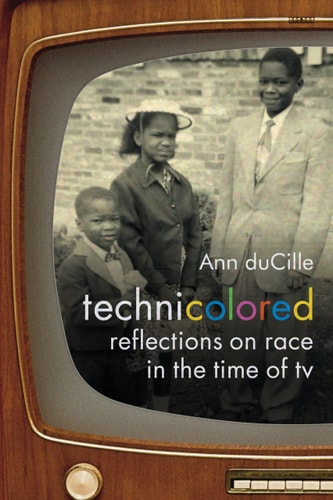
Technicolored Reflections on Race in the Time of TV
0
0
As an Amazon Associate and affiliate partner, Menrva Books earns from qualifying purchases. Learn more
Author Description
From early sitcoms such as I Love Lucy to contemporary prime-time dramas like Scandal and How to Get Away with Murder, African Americans on television have too often been asked to portray tired stereotypes of blacks as villains, vixens, victims, and disposable minorities. In Technicolored black feminist critic Ann duCille combines cultural critique with personal reflections on growing up with the new medium of TV to examine how televisual representations of African Americans have changed over the last sixty years. Whether explaining how watching Shirley Temple led her to question her own self-worth or how televisual representation functions as a form of racial profiling, duCille traces the real-life social and political repercussions of the portrayal and presence of African Americans on television. Neither a conventional memoir nor a traditional media study, Technicolored offers one lifelong television watcher's careful, personal, and timely analysis of how television continues to shape notions of race in the American imagination.
Menrva's Summary
THE THESIS
This book investigates the evolution of African American representation on television and its impact on racial perceptions. Ann duCille, a Black feminist critic, blends cultural critique with personal reflections to analyze how television has portrayed African Americans over sixty years, from early sitcoms to contemporary dramas. She examines how these representations, often relying on stereotypes, have shaped both individual self-worth and broader societal notions of race, functioning as a form of racial profiling. The analysis explores the real-life social and political repercussions of these portrayals, offering a unique perspective that is neither a conventional memoir nor a traditional media study.
THE SCOPE MAP
- Analysis of early sitcoms like 'I Love Lucy' and their portrayal of African Americans.
- Examination of contemporary prime-time dramas such as 'Scandal' and 'How to Get Away with Murder'.
- Critique of recurring stereotypes: villains, vixens, victims, and disposable minorities.
- Personal reflections on growing up with television and its influence on self-worth.
- Exploration of televisual representation as a form of racial profiling.
- Tracing the social and political repercussions of African American portrayals on TV.
- A blend of cultural critique and personal narrative.
- Analysis of how television continues to shape American imagination regarding race.
THE AUTHORITY PERSPECTIVE
The book is characterized as a timely analysis of television's role in shaping racial perceptions in America. It is noted for its unique approach, combining cultural critique with personal reflection, which distinguishes it from conventional memoirs or media studies. The author's perspective as a lifelong television watcher and Black feminist critic offers a deeply personal yet analytical lens on the subject. The work is positioned as a significant contribution to understanding the ongoing influence of media on racial imagination.
Page Count:
340
Publication Date:
2018-01-01
Publisher:
Duke University Press
ISBN-10:
1478000481
ISBN-13:
9781478000488
Non-Fiction
History
Autobiography
Media Studies
Sociology
Community Tags
Similar Books