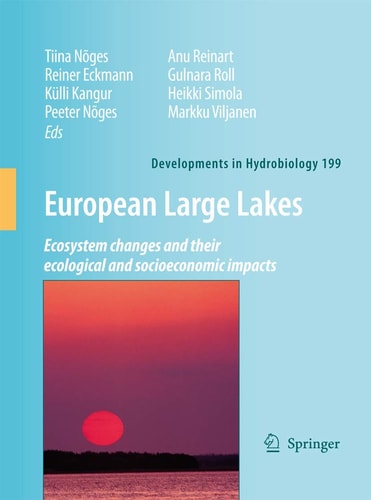
European Large Lakes: Ecosystem Changes and Their Ecological and Socioeconomic Impacts
0
0
As an Amazon Associate and affiliate partner, Menrva Books earns from qualifying purchases. Learn more
Author Description
Large lakes are important because of their size and ecological distinctiveness as well as their economic and cultural value. Optimal management of them requires a proper understanding of anthropogenic impacts both on the lake ecosystems as such and on the services they provide for society. The specific structural and functional properties of large lakes, e.g. morphology, hydrography, biogeochemical cycles and food-web structure, are all directly related to their size. Although large lakes are among the best-studied ecosystems in the world, the application to them of environmental regulations such as the European Water Framework Directive is a challenging task and requires that several natural and management aspects specific to these water bodies are adequately considered. These vulnerable ecosystems often suffer from accelerated eutrophication, over-fishing, toxic contamination and invasive species. Large lakes offer socio-economic benefits and can be used in many ways, and are often areas in which economic, cultural and political interests overlap. In this book the problems regarding the present status of European large lakes and the directions of change are discussed. Threats caused by direct human impact and by climate change, protection needs and restoration measures are considered.
Menrva's Summary
THE THESIS
Large lakes, vital ecosystems of significant ecological and socioeconomic importance, face complex challenges due to anthropogenic impacts and climate change. This book addresses the current status and changes within European large lakes, exploring how their unique properties—shaped by size, morphology, and biogeochemical cycles—are affected by human activities and environmental shifts. It examines threats such as eutrophication, over-fishing, contamination, and invasive species, while also considering the socio-economic benefits these lakes provide and the overlapping interests they engender.
THE SCOPE MAP
- Analysis of the specific structural and functional properties of large lakes related to their size.
- Discussion of anthropogenic impacts on lake ecosystems and the services they provide.
- Examination of threats including eutrophication, over-fishing, toxic contamination, and invasive species.
- Consideration of the challenges in applying environmental regulations like the European Water Framework Directive to large lakes.
- Exploration of the socio-economic benefits and uses of large lakes, where interests often overlap.
- Discussion of the present status and directions of change in European large lakes.
- Assessment of threats posed by direct human impact and climate change.
- Consideration of protection needs and restoration measures for vulnerable large lake ecosystems.
THE AUTHORITY PERSPECTIVE
This book is likely to be of interest to researchers and policymakers involved in aquatic ecosystem management and environmental science. The comprehensive approach, covering ecological changes and their socioeconomic consequences, suggests a thorough examination of complex interdependencies. The focus on European large lakes provides a specific regional context for understanding broader global challenges in freshwater ecosystem conservation and management. The authors' collective expertise in limnology and related fields indicates a scientifically rigorous treatment of the subject matter.
Page Count:
276
Publication Date:
2010-11-23
Publisher:
Springer Netherlands
ISBN-10:
9048178614
ISBN-13:
9789048178612
Science
Non-Fiction
Limnology
Socioeconomics
Ecology
Community Tags
Similar Books