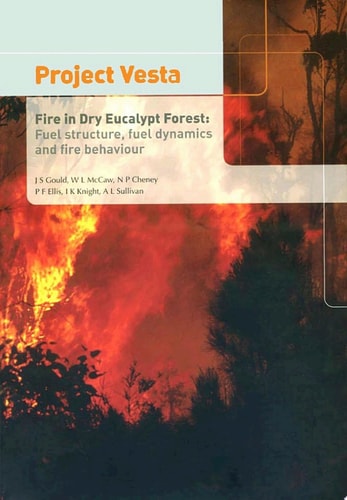
Project Vesta: Fire in Dry Eucalypt Forest Fuel Structure, Fuel Dynamics and Fire Behaviour
0
0
As an Amazon Associate and affiliate partner, Menrva Books earns from qualifying purchases. Learn more
Author Description
Project Vesta was a comprehensive research project to investigate the behaviour and spread of high-intensity bushfires in dry eucalypt forests with different fuel ages and understorey vegetation structures. The project was designed to quantify age-related changes in fuel attributes and fire behaviour in dry eucalypt forests typical of southern Australia. The four main scientific aims of Project Vesta were: To quantify the changes in the behaviour of fire in dry eucalypt forest as fuel develops with age (i.e. time since fire); To characterise wind speed profiles in forest with different overstorey and understorey vegetation structure in relation to fire behaviour; To develop new algorithms describing the relationship between fire spread and wind speed, and fire spread and fuel characteristics including load, structure and height; and to develop a National Fire Behaviour Prediction System for dry eucalypt forests. These aims have been addressed through a program of experimental burning and associated studies at two sites in the south-west of Western Australia.
Menrva's Summary
THE THESIS
This research project investigated the behavior and spread of high-intensity bushfires in dry eucalypt forests. Project Vesta aimed to quantify age-related changes in fuel attributes and fire behavior in dry eucalypt forests typical of southern Australia, focusing on four key scientific objectives: understanding fire behavior changes with fuel age, characterizing wind speed profiles in relation to fire behavior, developing algorithms for fire spread based on fuel and wind, and creating a National Fire Behaviour Prediction System for these forests. These objectives were pursued through experimental burns and studies in Western Australia.
THE SCOPE MAP
- Quantification of fire behavior changes in dry eucalypt forests as fuel develops with age (time since fire).
- Characterization of wind speed profiles in forests with varying overstorey and understorey vegetation structures in relation to fire behavior.
- Development of new algorithms describing the relationship between fire spread and wind speed.
- Development of new algorithms describing the relationship between fire spread and fuel characteristics (load, structure, height).
- Development of a National Fire Behaviour Prediction System for dry eucalypt forests.
- Experimental burning and associated studies conducted at two sites in the south-west of Western Australia.
- Analysis of age-related changes in fuel attributes and fire behavior.
THE AUTHORITY PERSPECTIVE
The research presented in Project Vesta addresses critical aspects of bushfire behavior in dry eucalypt forests, focusing on fuel structure and dynamics. The project's aims suggest a rigorous scientific approach to understanding and predicting fire spread, which is vital for land management and public safety in Australia. The methodology, involving experimental burning and detailed data collection, indicates a focus on empirical evidence to support the development of predictive models. This work is likely to be of significant interest to researchers, foresters, and fire management agencies concerned with wildfire dynamics in similar ecosystems.
Page Count:
228
Publication Date:
2008-08-12
Publisher:
CSIRO PUBLISHING
ISBN-10:
0643102779
ISBN-13:
9780643102774
Non-Fiction
Science
Fire Science
Forestry
Ecology
Community Tags
Similar Books