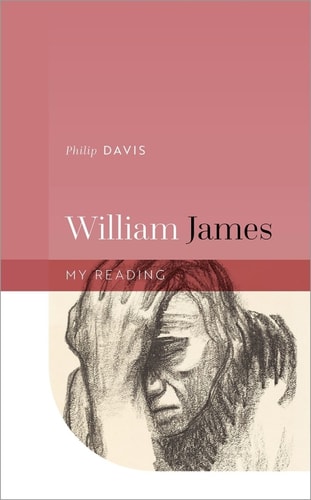
William James (My Reading)
0
0
As an Amazon Associate and affiliate partner, Menrva Books earns from qualifying purchases. Learn more
Author Description
Discusses the life and work of William James, a founder of the study of psychology. William James (1842-1910) was elder brother to the novelist Henry James and a founder of the study of psychology. But he was also a thinker who sought to work across conventional boundaries, and did not believe in separate disciplines or over-professionalized ways of thinking. James was above all interested in those moments when thoughts suddenly come into being, 'hot' and 'alive'. William James is for anyone who has experienced the personal need for such thinking and feels the excitement of ideas. It concerns the personal experience of reading James, involving extensive quotation from his work in relation to Philip Davis' own inner life and the lives of other readers of James--a thinker who is defiantly convinced of the fundamental validity of the inner life in the making of the Real. This book is about William James's life-writing, writing for the sake of existence, that puts together a mix of literature, psychology, philosophy, and biography in the search for purpose and human flourishing, in place of formal religion. It includes James' interest in his brother's novels and in Shakespearean drama, as well as Thomas Hardy's pessimistic challenge to James. Davis is a reader of literature who feels that readers of novels and poems also need the help of psychology and philosophy, to get the thinking out, to make it into a working part of a life. His book is for readers, especially readers of literature, seeking to create, like William James, a literary way of thinking outside the realm of literature.
Menrva's Summary
THE THESIS
This book investigates how the life and intellectual contributions of William James can serve as a framework for personal meaning and human flourishing in the absence of traditional religious structures. Philip J. Davis, a scholar of literature, examines the work of William James not merely as historical psychology but as a vital, lived practice. By integrating James's philosophical inquiries with literary analysis and personal reflection, Davis argues that James's rejection of rigid disciplinary boundaries offers a model for thinking that remains 'hot' and 'alive' for the modern reader.
THE SCOPE MAP
What You Will Find
- An analysis of William James's foundational theories in psychology and philosophy.
- A comparative study of James's work alongside the literature of Henry James, Shakespeare, and Thomas Hardy.
- A methodology for applying philosophical and psychological concepts to personal life-writing and existential inquiry.
Scope Limits
- The text does not provide a comprehensive or strictly chronological biography of William James.
- It does not offer a technical manual for clinical psychological practice.
THE AUTHORITY PERSPECTIVE
Readers and scholars frequently note that this text functions as a hybrid of memoir and intellectual history rather than a standard academic biography. Experts highlight the book as a unique resource for those interested in the intersection of literary studies and the history of ideas.
Page Count:
202
Publication Date:
2022-01-01
Publisher:
OUP Oxford
ISBN-10:
0192663119
ISBN-13:
9780192663115
Philosophy
Psychology
Biography
Non-Fiction
Literary Criticism
English
English & College Success
Community Tags
Similar Books