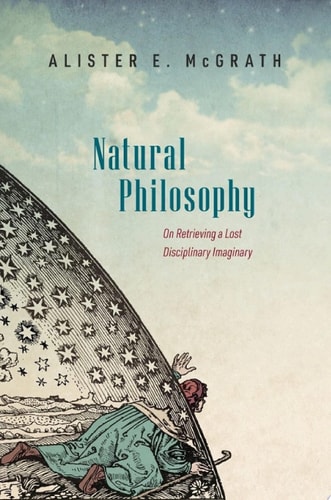
Natural Philosophy: On Retrieving a Lost Disciplinary Imaginary
0
0
As an Amazon Associate and affiliate partner, Menrva Books earns from qualifying purchases. Learn more
Author Description
Recovering the forgotten discipline of Natural Philosophy for the modern world This book argues for the retrieval of 'natural philosophy', a concept that faded into comparative obscurity as individual scientific disciplines became established and institutionalized. Natural philosophy was understood in the early modern period as a way of exploring the human relationship with the natural world, encompassing what would now be seen as the distinct disciplines of the natural sciences, mathematics, music, philosophy, and theology.The first part of the work represents a critical conversation with the tradition, identifying the essential characteristics of natural philosophy, particularly its emphasis on both learning about and learning from nature. After noting the factors which led to the disintegration of natural philosophy during the nineteenth century, the second part of the work sets out the reasons why natural philosophy should be retrieved, and a creative and innovative proposal for how this might be done. This draws on Karl Popper's 'Three Worlds' and Mary Midgley's notion of using multiple maps in bringing together the many aspects of the human encounter with the natural world. Such a retrieved or 're-imagined' natural philosophy is able to encourage both human attentiveness and respectfulness towards Nature, while enfolding both the desire to understand the natural world, and the need to preserve the affective, imaginative, and aesthetic aspects of the human response to nature.
Menrva's Summary
THE THESIS
This book investigates the historical decline of natural philosophy and proposes a framework for its retrieval as a unified disciplinary approach to understanding the natural world. Alister E. McGrath, a scholar of historical theology and science, utilizes historical analysis and philosophical synthesis to argue that the modern fragmentation of knowledge into isolated scientific disciplines has impoverished our relationship with nature. He posits that by reintegrating scientific inquiry with aesthetic, theological, and philosophical perspectives, we can foster a more holistic and respectful engagement with the environment.
THE SCOPE MAP
What You Will Find
- Historical analysis of the disintegration of natural philosophy during the nineteenth century.
- A theoretical framework incorporating Karl Popper's 'Three Worlds' and Mary Midgley's 'multiple maps' concept.
- A proposal for a re-imagined, interdisciplinary approach to the natural world.
Scope Limits
- The text does not provide a comprehensive history of every scientific discipline.
- It does not offer a technical manual for specific laboratory or field research methodologies.
THE AUTHORITY PERSPECTIVE
Scholars and readers frequently note the academic rigor and interdisciplinary breadth of McGrath's prose. Experts highlight this work as a significant contribution to the ongoing dialogue between the history of science and contemporary philosophical inquiry.
Page Count:
256
Publication Date:
2022-01-01
Publisher:
OUP Oxford
ISBN-10:
0192689630
ISBN-13:
9780192689634
Philosophy
Science History
Epistemology
Science and Religion