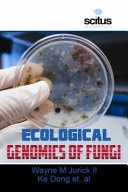
Ecological Genomics of Fungi
0
0
As an Amazon Associate and affiliate partner, Menrva Books earns from qualifying purchases. Learn more
Author Description
Fungi are cryptic, understudied and hyperdiverse organisms. Fungi are poorly documented organisms and the phylogenetic relationships within the kingdom are not yet fully understood, but recent efforts have been shedding light on the evolutionary history of the Fungi. Fungi have been known and used by humans for centuries, but mycology traces beginnings to the 18th century, with the development of the microscope. While much has been discovered since then, fungi remain today a cryptic and understudied group of organisms. The tools of molecular biology and genomics can help us meet this challenge. Over the past decades, genomics, and genome sequencing in particular, have emerged as powerful tools for biological research. In the last few years, due to the introduction of the next-generation sequencing (NGS) technologies, these tools went through dramatic transformations. Ecological Genomics of Fungi brings together studies related to pathogenic fungi, fungal biology, and all other aspects of fungal research. It covers a broad diversity of fungal systems and provides unique insight into the functions of those fungi in various ecosystems - from soil, to plant, to human. It also discusses tools, applications, and the most recent developments available to explore the biology of soil fungi at the molecular level. This book addresses the wonders of fungal diversity, including recent advances on the understanding of the evolution of the kingdom Fungi, approaches to documenting and interpreting fungal diversity, and current efforts concerning fungal conservation. The book also includes investigations of fungi and their traditional allies that relate structure and function to growth, reproduction, morphogenesis, differentiation, its role as pathogen and parasites, its applications in various fields like industry and agriculture and medicinal uses.
Menrva's Summary
THE THESIS
This book investigates the application of modern genomic tools to understand the ecological roles and evolutionary history of fungi. Fungi, despite their hyperdiversity and crucial roles in ecosystems, remain understudied. This volume synthesizes recent advancements in molecular biology and genomics, particularly next-generation sequencing, to address challenges in fungal research. It explores the functions of fungi across diverse environments, from soil to plants and humans, and discusses their evolutionary relationships and conservation.
THE SCOPE MAP
- Studies on pathogenic fungi and their impact.
- Insights into fungal biology and diverse ecosystems (soil, plant, human).
- Applications of molecular and genomic tools, including next-generation sequencing.
- Recent advances in understanding fungal evolution and diversity.
- Approaches to documenting and interpreting fungal diversity.
- Current efforts in fungal conservation.
- Investigations into fungal structure, function, growth, reproduction, and morphogenesis.
- Roles of fungi as pathogens and parasites.
- Applications in industry, agriculture, and medicine.
THE AUTHORITY PERSPECTIVE
The book serves as a comprehensive collection of studies applying genomic techniques to fungal research, covering a wide array of topics from pathogenicity to ecological function and evolution. It highlights the transformative power of genomics in understanding these often-cryptic organisms. The compilation aims to provide insights into the diversity, evolution, and conservation of fungi, alongside their practical applications. The content suggests a resource for researchers and students interested in the molecular aspects of mycology and fungal ecology.
Page Count:
380
Publication Date:
2018-06-01
Publisher:
Scitus Academics LLC
ISBN-10:
1642230111
ISBN-13:
9781642230116
Science
Non-Fiction
Ecology
Fungi
Mycology
Evolution
Genomics
Community Tags
Similar Books