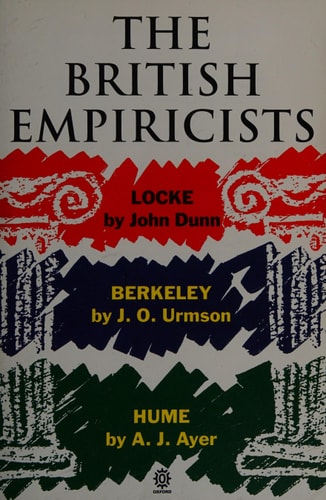
The British Empiricists: Locke, Berkeley, Hume
0
0
As an Amazon Associate and affiliate partner, Menrva Books earns from qualifying purchases. Learn more
Author Description
The British Empiricists offers concise, accessible introductions to the life and work of Locke, Berkeley, and Hume. John Dunn shows how Locke arrived at the theory of knowledge which he puts forward in his Essay Concerning Human Understanding. J.O. Urmson assesses Berkeley's philosophy in its relation to the thought of Newton and his predecessors, while A.J. Ayer, an esteemed philosopher in his own right, offers insight into Hume's theories of perception and self-identity, his analysis of causation, and his moral, political, and religious philosophy.Originally written for the acclaimed Past Masters series, these authoritative studies provide a unique guide to some of the most influential ideas in British philosophy.
Menrva's Summary
THE THESIS
This volume investigates the foundational principles and intellectual contributions of the three primary figures of British Empiricism: John Locke, George Berkeley, and David Hume. The authors, all distinguished scholars in the field of philosophy, provide a structured analysis of how these thinkers challenged prevailing rationalist doctrines. By examining the historical context and logical frameworks of their respective works, the text clarifies the development of modern theories regarding perception, identity, and causation.
THE SCOPE MAP
What You Will Find
- Detailed analysis of John Locke's theory of knowledge as presented in his Essay Concerning Human Understanding.
- An assessment of George Berkeley's philosophical system in the context of Newtonian science.
- A comprehensive breakdown of David Hume's perspectives on perception, self-identity, causation, and moral philosophy.
Scope Limits
- The text does not provide a exhaustive biography of each philosopher, focusing primarily on their intellectual output.
- It does not cover the later developments of empiricism beyond the eighteenth century.
THE AUTHORITY PERSPECTIVE
Experts recognize this collection as a reliable and concise entry point for students and general readers interested in the history of philosophy. Readers frequently note that the prose is accessible while maintaining the academic rigor expected from the Past Masters series.
Page Count:
304
Publication Date:
1992-06-25
Publisher:
Oxford University Press
ISBN-10:
0192830686
ISBN-13:
9780192830685
Philosophy
Non-Fiction
Empiricism
Philosophy British
Philosophy history
Epistemology
Community Tags
Similar Books