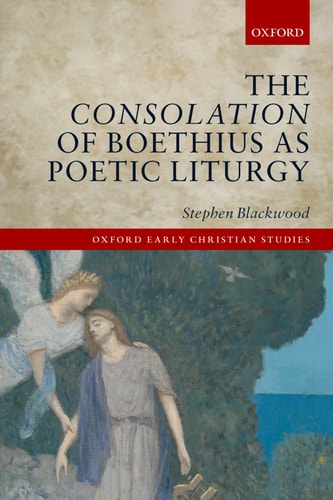
The Consolation of Boethius as Poetic Liturgy
0
0
As an Amazon Associate and affiliate partner, Menrva Books earns from qualifying purchases. Learn more
Author Description
Throughout Antiquity and the Middle Ages, literature was read with the ear as much as with the eye: silent reading was the exception; audible reading, the norm. This highly original book shows that Boethius's Consolation of Philosophy - one of the most widely-read texts in Western history-aims to affect the listener through the designs of its rhythmic sound. Stephen Blackwood argues that the Consolation's metres are arranged in patterns that have a therapeutic and liturgical purpose: as a bodily mediation of the text's consolation, these rhythmic patterns enable the listener to discern the eternal in the motion of time. The Consolation of Boethius as Poetic Liturgy vividly explores how in this acoustic encounter with the text philosophy becomes a lived reality, and reading a kind of prayer.
Menrva's Summary
THE THESIS
This book investigates how the rhythmic and acoustic structures of Boethius's Consolation of Philosophy function as a form of liturgical and therapeutic practice for the reader. Stephen Blackwood, a scholar of early Christian thought, examines the text not merely as a philosophical treatise but as a performance piece designed for audible reception. He argues that the specific arrangement of metres serves to mediate the text's consolatory themes, transforming the act of reading into a meditative or prayerful experience that bridges the gap between temporal motion and eternal truth.
THE SCOPE MAP
What You Will Find
- Analysis of the rhythmic patterns and metrical structures within the Consolation of Philosophy
- A framework for understanding ancient and medieval reading practices as auditory experiences
- Exploration of the intersection between classical philosophy and liturgical theology
Scope Limits
- The study focuses primarily on the acoustic and liturgical dimensions rather than a comprehensive political or historical analysis of Boethius's life
- It does not provide a general introduction to Boethian philosophy for absolute beginners
THE AUTHORITY PERSPECTIVE
Scholars and historians of late antiquity identify this work as a significant contribution to the study of Boethius, particularly for its focus on the performative aspects of his writing. Readers frequently note the academic density of the prose, which requires a strong background in both classical metrics and theological history to fully appreciate the author's arguments.
Page Count:
368
Publication Date:
2022-05-24
Publisher:
Oxford University Press
ISBN-10:
0192864025
ISBN-13:
9780192864024
History
Philosophy
Politics
Church History
British & Irish
New Used & Rental Textbooks
Theology
Church Leadership
Literary Criticism