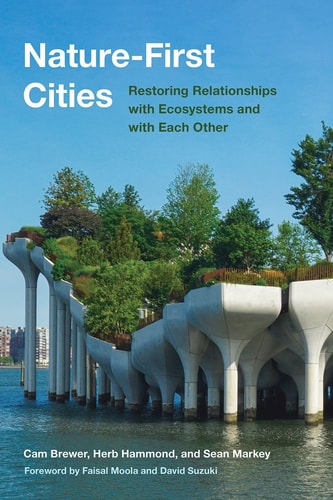
Nature-First Cities: Restoring Relationships with Ecosystems and with Each Other
0
0
As an Amazon Associate and affiliate partner, Menrva Books earns from qualifying purchases. Learn more
Author Description
Argues that humans and nature can and should coexist in urban environments. Nature belongs in cities, but how do we put nature first without pushing people aside? Nature-First Cities reveals the false dichotomy of that question by recognizing that people and nature are indivisible. Western urbanization has meant the ongoing expulsion of nature, which is engendering biodiversity loss and inequality, thwarting economic potential, and affecting health. This volume instead applies the science and practice of nature-directed stewardship to cities. Tested through case studies, this methodology for urban ecosystem restoration is uniquely effective at revitalizing our strained cities. Nature is woven into networks, distributed equitably across neighborhoods, and partnered with the urban density that is essential for addressing the climate crisis. Nature-First Cities offers a practical framework for urban planning that reinforces our place in nature both physically, by ensuring that cities are replete with biodiversity and intact ecosystems, and conceptually, by rebalancing our relationships with the planet and with one another.
Menrva's Summary
THE THESIS
This book argues that urban environments must prioritize ecological restoration to address biodiversity loss, inequality, and the climate crisis. The authors contend that the perceived conflict between nature and people in cities is a false dichotomy, asserting that human and natural systems are intrinsically linked. By applying the principles of nature-directed stewardship, the book proposes a methodology for urban ecosystem restoration that revitalizes cities through equitable distribution of biodiversity and intact ecosystems, integrated with urban density. This approach aims to rebalance humanity's relationship with the planet and each other, ensuring cities are not only ecologically sound but also socially equitable.
THE SCOPE MAP
- A framework for urban planning that integrates ecological restoration with urban density.
- Case studies demonstrating the practical application of nature-directed stewardship in cities.
- Analysis of how urbanization contributes to biodiversity loss and social inequality.
- Strategies for equitable distribution of natural resources within urban neighborhoods.
- Discussion on the interconnectedness of human and natural systems in urban contexts.
- Methods for revitalizing strained urban environments through ecosystem restoration.
THE AUTHORITY PERSPECTIVE
The book presents a compelling argument for the indivisibility of human and natural systems within urban environments, proposing nature-directed stewardship as a practical methodology for restoration. The authors' approach, tested through case studies, aims to address critical issues such as biodiversity loss, inequality, and the climate crisis by integrating ecological health with urban density. The framework offered suggests a path towards revitalizing cities by ensuring equitable access to nature and fostering a rebalanced relationship with the planet. This work is positioned to inform urban planners, policymakers, and citizens interested in creating more sustainable and equitable urban futures.
Page Count:
236
Publication Date:
2024-01-01
Publisher:
UBC Press
ISBN-10:
0774868643
ISBN-13:
9780774868648
Science
Non-Fiction
Sociology
Ecology
Sustainability
urban planning
Community Tags
Similar Books