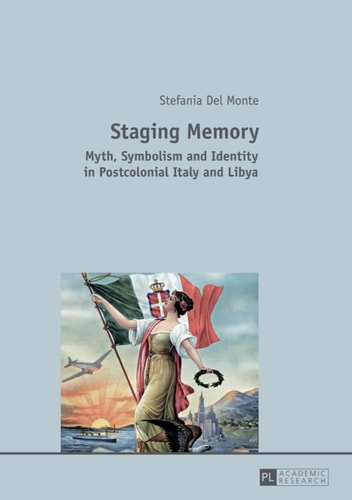
Staging Memory
0
0
As an Amazon Associate and affiliate partner, Menrva Books earns from qualifying purchases. Learn more
Author Description
Memory in postcolonial Italy and Libya has been used, reinterpreted and staged by political powers and the media. This book investigates the roots of myth, colonial amnesia and censorship in postwar Italy, as well as Colonel Gaddafi’s deliberate use of rituals, symbols, and the colonial past to shape national identity in Libya. The argument is sustained by case studies ranging among film, documentary, literature and art, shedding new light on how memory has been treated in the two postcolonial societies examined. The last part briefly analyses the identity transformation process in the new Libya.
Menrva's Summary
THE THESIS
This book examines how memory has been manipulated and reinterpreted in postcolonial Italy and Libya by political powers and media. It investigates the origins of myth, colonial amnesia, and censorship in postwar Italy, alongside Colonel Gaddafi's strategic use of rituals, symbols, and the colonial past to forge national identity in Libya. The analysis is supported by case studies drawn from film, documentary, literature, and art, offering a fresh perspective on the treatment of memory in these two postcolonial societies. The final section briefly explores the process of identity transformation in the new Libya.
THE SCOPE MAP
- Analysis of myth, colonial amnesia, and censorship in postwar Italy.
- Examination of Colonel Gaddafi's use of rituals, symbols, and the colonial past in Libya.
- Case studies from film, documentary, literature, and art.
- Comparative study of memory treatment in Italy and Libya.
- Exploration of identity transformation in contemporary Libya.
THE AUTHORITY PERSPECTIVE
The book's approach to memory in postcolonial Italy and Libya suggests a dense, analytical text focusing on the intersection of politics, media, and cultural identity. The use of diverse case studies from various media indicates a comprehensive scope, likely appealing to scholars and students of postcolonial studies, history, and media theory. The comparative framework between Italy and Libya promises nuanced insights into how national narratives are constructed and contested through the staging of collective memory.
Page Count:
133
Publication Date:
2015-06-26
Publisher:
Peter Lang
ISBN-10:
3653056225
ISBN-13:
9783653056228
History
Non-Fiction
Italian History
Memory Studies
Media Studies
Cultural History
Community Tags
Similar Books