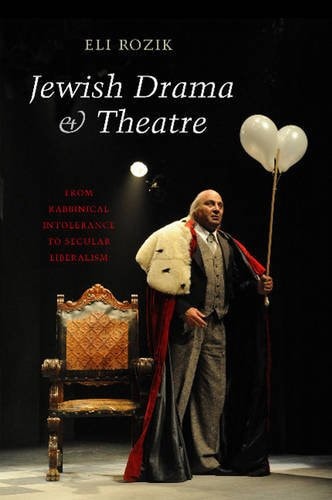
Jewish Drama and Theatre From Rabbinical Intolerance to Secular Liberalism
0
0
As an Amazon Associate and affiliate partner, Menrva Books earns from qualifying purchases. Learn more
Author Description
Jewish drama and theatre has followed a tortuous path from extreme rabbinical intolerance to eventual secular liberalism, with its openness to the heritages of both Judaism as a culture and prominent foreign cultures, to the extent of multicultural integration. No wonder, therefore, that since biblical times until the seventeenth century there are only examples of tangential theatre practices. This initial intolerance, shared by the Church, was rooted in pagan connotations of theatre rather than in the neutral nature of the theatre medium, capable of formulating and communicating contrasting thoughts. Whereas by the tenth century the Church understood that theatre could be harnessed to its own ends, Jewish theatre was only created seven centuries later through spontaneous and amateurish theatrical practices, such as the Yiddish purim-shpil and the purim-rabbi. Due to their carnivalesque and cathartic nature these practices were tolerated by the rabbinical establishment, albeit only during the Purim holiday. But as a result, Jewish drama and theatre were created and emerged despite rabbinical antagonism. Under the influence of the Jewish Enlightenment, Yiddish-speaking theatres were increasingly established, a trend that became central in the cultural enterprise of the Jews in Israel. This process involved a renewed use of Hebrew as a spoken language, and the transition from a profound religious identity to a secular Jewish one, characterised by a basic liberalism to the extent of openness to cultures traditionally perceived as archetypal enemies of Judaism. This book sets out to analyse play-scripts and performance-texts produced in the Israeli theatre in order to illustrate these trends, and concludes that only a liberal society can bring about the full realisation of theatre's potentialities.
Menrva's Summary
THE THESIS
This book traces the complex evolution of Jewish drama and theatre from a history of rabbinical intolerance to a modern secular liberalism. The work examines how Jewish theatre, initially suppressed due to pagan connotations and rabbinical opposition, eventually emerged through spontaneous practices like the Yiddish purim-shpil. Influenced by the Jewish Enlightenment, Yiddish-speaking theatres gained prominence, particularly in Israel, marking a shift from religious to secular Jewish identity and an openness to diverse cultures. The book analyzes play-scripts and performance-texts from Israeli theatre to illustrate these trends, arguing that a liberal society is essential for realizing theatre's full potential.
THE SCOPE MAP
- Analysis of Jewish theatre practices from biblical times to the seventeenth century, noting tangential theatre forms.
- Exploration of the historical roots of rabbinical intolerance towards theatre, comparing it with the Church's stance.
- Discussion of spontaneous and amateurish theatrical practices like the Yiddish purim-shpil and purim-rabbi, and their tolerance by the rabbinate.
- The impact of the Jewish Enlightenment on the establishment of Yiddish-speaking theatres.
- The role of theatre in the cultural enterprise of Jews in Israel, including the renewed use of Hebrew.
- The transition from a profound religious identity to a secular Jewish identity characterized by liberalism and cultural openness.
- Analysis of play-scripts and performance-texts from Israeli theatre to demonstrate historical trends.
- Conclusion on the relationship between liberal societies and the full realization of theatre's potentialities.
THE AUTHORITY PERSPECTIVE
The book offers a detailed historical analysis of Jewish theatre, charting its difficult journey from suppression to acceptance. It highlights the cultural and religious shifts that influenced theatrical expression, particularly within the context of the Jewish Enlightenment and the development of theatre in Israel. The work posits that a liberal societal framework is crucial for the flourishing of theatrical arts. The analysis is grounded in specific play-scripts and performance-texts, providing a scholarly examination of the subject.
Page Count:
320
Publication Date:
2013-07-01
Publisher:
Liverpool University Press
ISBN-10:
1845197240
ISBN-13:
9781845197247
History
Non-Fiction
Cultural History
Theater History
Modern History
Jewish Studies
Community Tags
Similar Books