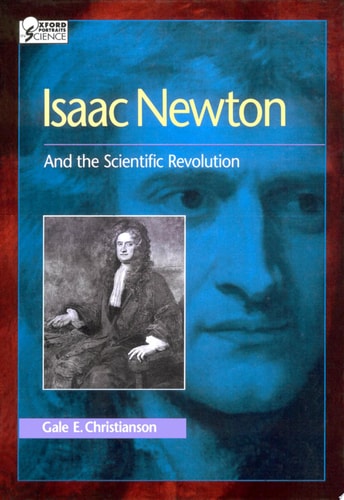
Isaac Newton: And the Scientific Revolution
0
0
As an Amazon Associate and affiliate partner, Menrva Books earns from qualifying purchases. Learn more
Author Description
In 1665, when an epidemic of the plague forced Cambridge University to close, Isaac Newton, then a young, undistinguished scholar, returned to his childhood home in rural England. Away from his colleagues and professors, Newton embarked on one of the greatest intellectual odysseys in the history of science: he began to formulate the law of universal gravitation, developed the calculus, and made revolutionary discoveries about the nature of light. After his return to Cambridge, Newton's genius was quickly recognized and his reputation forever established. This biography also allows us to see the personal side of Newton, whose life away from science was equally fascinating. Quarrelsome, quirky, and not above using his position to silence critics and further his own career, he was an authentic genius with all too human faults.Oxford Portraits in Science is an on-going series of scientific biographies for young adults. Written by top scholars and writers, each biography examines the personality of its subject as well as the thought process leading to his or her discoveries. These illustrated biographies combine accessible technical information with compelling personal stories to portray the scientists whose work has shaped our understanding of the natural world.
Menrva's Summary
THE THESIS
This biography investigates how Isaac Newton transformed from an undistinguished scholar into the architect of modern physics during the isolation of the 1665 plague. Gale E. Christianson, a noted historian of science, utilizes primary source documents and historical context to reconstruct Newton's intellectual development. The text argues that Newton's scientific breakthroughs were inextricably linked to his complex, often volatile personality. By balancing technical explanations of calculus and optics with accounts of his professional rivalries, the author presents a comprehensive portrait of a man whose personal flaws were as significant as his scientific contributions.
THE SCOPE MAP
What You Will Find
- A detailed account of Newton's formative years and his time at Cambridge University during the 1665 plague.
- Explanations of the development of universal gravitation, calculus, and the nature of light.
- Analysis of Newton's interpersonal conflicts and his strategic use of professional power.
- Contextual history regarding the scientific climate of 17th-century England.
THE AUTHORITY PERSPECTIVE
Experts and educators frequently cite this work as an accessible entry point for students interested in the history of science. Readers often note that the prose successfully bridges the gap between complex technical achievements and the human reality of a historical figure.
Page Count:
160
Publication Date:
1996-09-19
Publisher:
Oxford University Press
ISBN-10:
0195092244
ISBN-13:
9780195092240
History
Science
Biography
Physics
English & College Success
Science
Physics history
Mathematics
English
Community Tags
Similar Books