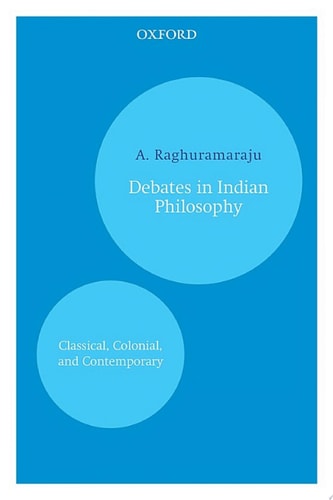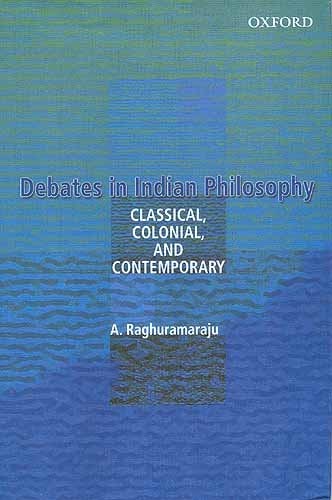
Debates in Indian Philosophy: Classical, Colonial, and Contemporary
0
0
As an Amazon Associate and affiliate partner, Menrva Books earns from qualifying purchases. Learn more
Author Description
This book retraces the severity of the impact of colonialism and Western philosophy on the making of Indian thought. It highlights the general tendency in contemporary Indian philosophy to avoid direct dialogue as opposed to the rich and elaborate debates that formed the pivot of classical Indian tradition. The author peruses works in and on Indian philosophy, searching for possible and hidden dialogues and identifies three important areas where there is a clear possibility of dialogue: between Swami Vivekananda and Mahatma Gandhi, V.D. Savarkar and Mahatma Gandhi, and Sri Aurobindo and K.C. Bhattacharya. He retrieves these debates on state and pre-modern society, religion, and politics, and science and spiritualism respectively. He concludes by indicating possible directions that Indian philosophy can take, and explicates the nature of the postcolonial self not merely at a political level but by restoring the metaphysical texts of contemporary India. This book will be of considerable interest not only to students and scholars of Indian philosophy and religious studies but to scholars of politics and sociology as well.
Menrva's Summary
THE THESIS
This book investigates the historical and intellectual shift in Indian philosophy from the tradition of rigorous, direct debate to a contemporary state of avoidance, exacerbated by the impact of colonialism. A. Raghuramaraju, a scholar of Indian philosophy, examines how Western philosophical frameworks have influenced the development of modern Indian thought. By analyzing the works of prominent thinkers, he argues for the necessity of restoring a culture of dialogue to address the complexities of the postcolonial self and the metaphysical foundations of contemporary India.
THE SCOPE MAP
What You Will Find
- Comparative analysis of intellectual exchanges between figures such as Swami Vivekananda, Mahatma Gandhi, V.D. Savarkar, and K.C. Bhattacharya.
- Examination of the transition from classical Indian debate traditions to modern philosophical discourse.
- Exploration of thematic intersections including statehood, pre-modern society, religion, politics, science, and spiritualism.
- Methodological framework for identifying hidden dialogues within existing philosophical texts.
THE AUTHORITY PERSPECTIVE
Scholars and students of philosophy and sociology recognize this work as a significant contribution to the understanding of postcolonial intellectual history. Experts highlight the author's ability to bridge the gap between classical tradition and contemporary political discourse through meticulous textual analysis.
Page Count:
139
Publication Date:
2006-04-27
Publisher:
Oxford University Press
ISBN-10:
0195671511
ISBN-13:
9780195671513
Philosophy
Sociology
Indian philosophy