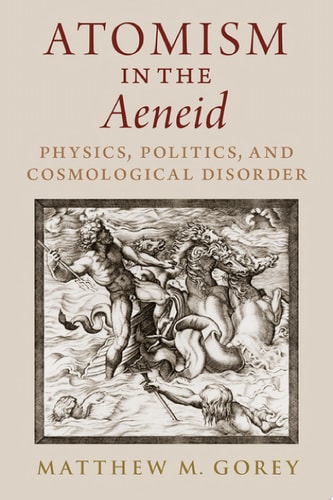
Atomism in the Aeneid: Physics, Politics, and Cosmological Disorder
0
0
As an Amazon Associate and affiliate partner, Menrva Books earns from qualifying purchases. Learn more
Author Description
Scholars have long recognized Lucretius's De Rerum Natura as an important allusive source for the Aeneid, but significant disagreement persists regarding the scope and purpose of Virgil's engagement with Epicurean philosophy. In Atomism in the Aeneid, Matthew M. Gorey investigates that engagement and argues that atomic imagery functions as a metaphor for cosmic and political disorder in Virgil's epic, associating the enemies of Aeneas and of Rome's imperial destiny with the haphazard, purposeless chaos of Epicurean atoms in the void. While nearly all of Virgil's allusions to atomism are constructed from Lucretian intertextual material, Gorey shows how the poet's negative reception of atomism draws upon a long and popular tradition of anti-atomist discourse in Greek philosophy that metaphorically likened the non-teleological cosmology of atomism to civic disorder and mob rule. By situating Virgil's atomic allusions within the tradition of philosophical opposition to Epicurean physics, Atomism in the Aeneid illustrates the deeply ideological nature of his engagement with Lucretius.
Menrva's Summary
THE THESIS
This work investigates the ideological function of Epicurean atomic imagery within Virgil's Aeneid, specifically questioning how the poet utilizes these philosophical concepts to characterize political and cosmic disorder. Matthew M. Gorey, a scholar of classical literature, synthesizes Lucretian intertextual material with broader traditions of anti-atomist discourse in Greek philosophy. By examining the tension between teleological Roman imperial destiny and the non-teleological nature of Epicurean physics, Gorey argues that Virgil employs atomic metaphors to frame the enemies of Rome as agents of haphazard chaos.
THE SCOPE MAP
What You Will Find
- Analysis of Lucretius's De Rerum Natura as a primary allusive source for the Aeneid.
- Examination of the historical tradition of anti-atomist discourse in Greek philosophy.
- Investigation into the metaphorical connection between atomic motion and civic instability.
- Evaluation of Virgil's ideological stance against non-teleological cosmology.
THE AUTHORITY PERSPECTIVE
Scholars recognize this text as a significant contribution to the study of Virgil's philosophical engagement with Epicureanism. The book is noted for its rigorous academic approach to intertextuality and its clear framing of the ideological conflict between Roman order and atomic chaos.
Page Count:
184
Publication Date:
2021-01-01
Publisher:
Oxford University Press
ISBN-10:
0197518761
ISBN-13:
9780197518762
History
Philosophy
Atomism
History & Surveys
Epic Poetry
Symbolism
Literary Criticism
Virgil
English
English & College Success
In literature
Community Tags
Similar Books