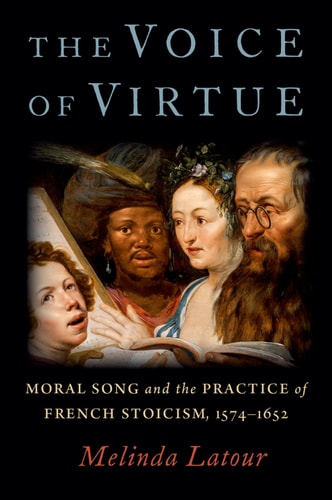
The Voice of Virtue: Moral Song and the Practice of French Stoicism, 1574-1652
0
0
As an Amazon Associate and affiliate partner, Menrva Books earns from qualifying purchases. Learn more
Author Description
The Voice of Virtue illuminates the musical practices at the heart of the Neostoic movement that spread across French lands during the Wars of Religion in the latter half of the sixteenth century. Guided by twin reparative traditions granting music and philosophy therapeutic power, composers and performers across the embattled Catholic and Protestant confessions turned to moral song as a means of repairing personal and collective virtue damaged by the ongoing conflict. Moral song collections enlarged interest in Stoic philosophy by circulating its ethical program to a broader audience through attractive paraphrases of Stoic maxims set to music. Even more importantly, this skillfully composed repertoire of polyphonic song offered a multi-sensory moral practice that would have resonated powerfully for those well-versed in the paradoxes of the Stoic tradition. Bringing together a repertoire of little-known music prints, a rich visual culture, and an impressive body of literary and philosophical sources, The Voice of Virtue not only illuminates the influence of Stoicism on music, but also reveals that we cannot fully understand Neostoicism as an intellectual or cultural movement without accounting for its vibrant musical sounds. Virtue, as voiced in these Stoic practices, proves to be both rational and fully invested in the sensory processes of the singing body.
Menrva's Summary
THE THESIS
This book investigates how the Neostoic movement utilized moral song as a therapeutic and ethical practice to restore virtue during the French Wars of Religion. Melinda Latour, a scholar of music and early modern culture, synthesizes musicology, philosophy, and historical analysis to argue that music was not merely an accompaniment to Stoic thought but a central component of its cultural dissemination. By examining the intersection of polyphonic song and Stoic maxims, the author demonstrates how these practices provided a multi-sensory framework for individuals navigating the political and religious instability of the late sixteenth and early seventeenth centuries.
THE SCOPE MAP
What You Will Find
- Analysis of musical prints and polyphonic song collections from 1574 to 1652.
- Examination of the Neostoic movement's influence on French cultural and intellectual life.
- Integration of visual culture, literary sources, and philosophical treatises.
- Methodology connecting sensory musical experience with the rational pursuit of Stoic ethics.
THE AUTHORITY PERSPECTIVE
Scholars recognize this work as a significant contribution to the study of early modern musicology and intellectual history. Experts highlight the author's ability to bridge the gap between abstract philosophical concepts and the practical, sensory application of music in a period of intense social conflict.
Page Count:
353
Publication Date:
2023-01-01
Publisher:
Oxford University Press
ISBN-10:
0197529755
ISBN-13:
9780197529751
Philosophy
History
Musicology
Criticism history
Humanities
Cultural History
Early Modern
Community Tags
Other Editions(2)
Similar Books