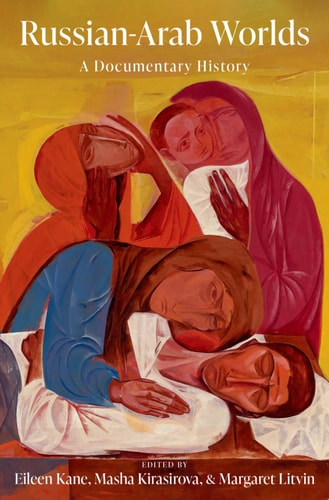
Russian-Arab Worlds: A Documentary History
0
0
As an Amazon Associate and affiliate partner, Menrva Books earns from qualifying purchases. Learn more
Author Description
The roots of the Arab world's current Russian entanglements reach deep into the tsarist and Soviet periods. To explore those entanglements, this book presents and contextualizes a set of primary sources translated from Russian, Arabic, Armenian, Persian, French, and Tatar: a 1772 Russian naval officer's diary, an Arabic slave sale deed from the Caucasus, an interview with a Russian-educated contemporary Syrian novelist, and many more. These archival, autobiographical, and literary sources, all appearing in English for the first time, are introduced by specialists and in some cases by pairs of scholars with complementary language expertise. They highlight connections long obscured by disciplinary cleavages between Slavic and Middle East studies.Taken together, the thirty-four chapters of this book show how various Russian/Soviet and Arab governments sought to nurture political and cultural ties and expand their influence, often with unplanned results. They reveal the transnational networks of trade, pilgrimage, study, ethnic identity, and political affinity that state policies sometimes fostered and sometimes disrupted. Above all they give voice to some of the resourceful characters who have embodied and exploited Arab-Russian contacts: missionaries and diplomats, soldiers and refugees, students and party activists, scholars, and spies. A set of specially commissioned maps helps orient readers amid the expansion and collapse of empires, border changes, population transfers, and creation of new nation-states that occurred during the two centuries these sources cover.
Menrva's Summary
THE THESIS
This book investigates the historical depth and complexity of the multifaceted entanglements between the Russian and Arab worlds from the tsarist era through the Soviet period. The authors, Eileen Kane, Margaret Litvin, and Masha Kirasirova, utilize a diverse collection of primary sources to challenge the traditional disciplinary boundaries that have historically separated Slavic and Middle Eastern studies. By presenting these documents in English for the first time, the text argues that these transnational networks of trade, diplomacy, and cultural exchange were shaped by both state policy and the individual agency of the people navigating these shifting geopolitical landscapes.
THE SCOPE MAP
What You Will Find
- A curated collection of thirty-four primary source documents translated from Russian, Arabic, Armenian, Persian, French, and Tatar.
- Detailed historical context provided by specialists for each document, covering two centuries of interaction.
- Specially commissioned maps illustrating shifting borders, empire collapses, and the formation of new nation-states.
- Analysis of diverse social actors including diplomats, refugees, students, and intelligence operatives.
THE AUTHORITY PERSPECTIVE
Scholars and historians recognize this volume as a significant contribution to transnational history that effectively bridges the gap between Slavic and Middle Eastern academic fields. The text is noted for its rigorous archival approach and its ability to synthesize complex, multi-lingual source material into an accessible format for researchers and students alike.
Page Count:
402
Publication Date:
2023-01-01
Publisher:
Oxford University Press
ISBN-10:
0197605788
ISBN-13:
9780197605783
History
English
International relations
Russian History
Documentary History
Asia history
English & College Success
Modern History
Middle Eastern
Community Tags
Similar Books