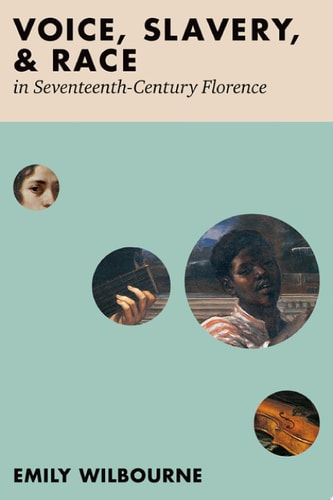
Voice, Slavery, and Race in Seventeenth-Century Florence
0
0
As an Amazon Associate and affiliate partner, Menrva Books earns from qualifying purchases. Learn more
Author Description
Grounded in new archival research documenting a significant presence of foreign and racially-marked individuals in Medici Florence, this book argues for the relevance of such individuals to the history of Western music and for the importance of sound-particularly musical and vocal sounds-to systems of racial and ethnic difference. Many of the individuals discussed in these pages were subject to enslavement or conditions of unfree labor; some labored at tasks that were explicitly musical or theatrical, while all intersected with sound and with practices of listening that afforded full personhood only to particular categories of people. Integrating historical detail alongside contemporary performances and musical conventions, this book makes the forceful claim that operatic musical techniques were-from their very inception-imbricated with racialized differences. Author Emily Wilbourne offers both a macro and micro approach to the content of this book. The first half of the volume draws upon a wide range of archival, theatrical and historical sources to articulate the theoretical interdependence of razza (lit. "race"), voice, and music in early modern Italy; the second half focuses on the life and work of a specific, racially-marked individual: the enslaved, Black, male soprano singer, Giovannino Buonaccorsi (fl.1651-1674). Voice, Slavery, and Race in Seventeenth-Century Florence reframes the place of racial difference in Western art music and provides a compelling pre-history to later racial formulations of the sonic.
Menrva's Summary
THE THESIS
This book investigates the historical intersection of racial identity, enslavement, and vocal performance within the musical culture of seventeenth-century Medici Florence. Author Emily Wilbourne utilizes extensive archival research to argue that the development of Western operatic techniques was fundamentally linked to the construction of racial and ethnic difference. By examining the lives of enslaved and racially-marked individuals, the text demonstrates how sound and listening practices were used to define and restrict personhood in early modern Italy.
THE SCOPE MAP
What You Will Find
- Archival documentation of foreign and racially-marked individuals in Medici Florence
- A theoretical framework connecting the Italian concept of razza to vocal and musical performance
- A detailed case study of the enslaved Black male soprano Giovannino Buonaccorsi
- Analysis of how early operatic conventions were imbricated with systems of unfree labor and racial hierarchy
THE AUTHORITY PERSPECTIVE
Scholars in musicology and early modern history recognize this work as a significant intervention in the study of race and sound. Readers frequently note the academic density of the prose and the rigor of the archival evidence presented throughout the volume.
Page Count:
520
Publication Date:
2023-01-01
Publisher:
Oxford University Press
ISBN-10:
0197646913
ISBN-13:
9780197646915
History
Musicology
Opera
Criticism history
Race Studies
Community Tags
Other Editions(2)
Similar Books