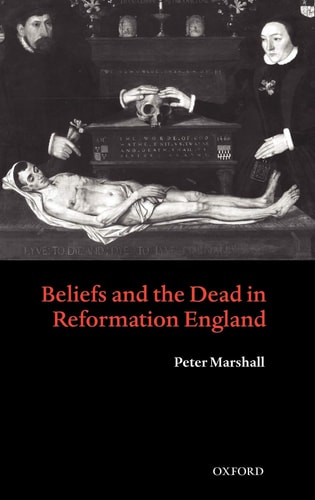
Beliefs and the Dead in Reformation England
0
0
As an Amazon Associate and affiliate partner, Menrva Books earns from qualifying purchases. Learn more
Author Description
This is the first comprehensive study of one of the most important aspects of the Reformation in England: its impact on the status of the dead. Protestant reformers insisted vehemently that between heaven and hell there was no 'middle place' of purgatory where the souls of the departed could be assisted by the prayers of those still living on earth. This was no remote theological proposition, but a revolutionary doctrine affecting the lives of all sixteenth-century English people, and the ways in which their Church and society were organized.This book illuminates the (sometimes ambivalent) attitudes towards the dead to be discerned in pre-Reformation religious culture, and traces (up to about 1630) the uncertain progress of the 'reformation of the dead' attempted by Protestant authorities, as they sought both to stamp out traditional rituals and to provide the replacements acceptable in an increasingly fragmented religious world. It also provides detailed surveys of Protestant perceptions of the afterlife, of the cultural meanings of the appearance of ghosts, and of the patterns of commemoration and memory which became characteristic of post-Reformation England. Together these topics constitute an important case-study in the nature and tempo of the English Reformation as an agent of social and cultural transformation.The book speaks directly to the central concerns of current Reformation scholarship, addressing questions posed by 'revisionist' historians about the vibrancy and resilience of traditional religious culture, and by 'post-revisionists' about the penetration of reformed ideas. Dr Marshall demonstrates not only that the dead can be regarded as a significant 'marker' of religious and cultural change, but that a persistent concern with their status did a great deal to fashion the distinctive appearance of the English Reformation as a whole, and to create its peculiarities and contradictory impulses.
Menrva's Summary
THE THESIS
This book investigates how the Protestant Reformation in England fundamentally altered the status of the dead and the societal rituals surrounding them. Peter Marshall, a scholar of early modern religious history, utilizes extensive archival research to examine the transition from traditional Catholic beliefs in purgatory to the reformed Protestant afterlife. He argues that the management of the dead served as a critical indicator of the broader social and cultural transformations occurring in sixteenth and seventeenth-century England.
THE SCOPE MAP
What You Will Find
- Analysis of pre-Reformation religious culture and the role of purgatory in English society.
- Examination of the Protestant effort to suppress traditional rituals and establish new commemorative practices.
- Investigation into the cultural significance of ghost sightings and afterlife perceptions in post-Reformation England.
- A case study on the tempo and penetration of reformed religious ideas within the English population up to 1630.
THE AUTHORITY PERSPECTIVE
Scholars recognize this work as a foundational text for understanding the intersection of theology and social practice in early modern England. Readers frequently note the academic density of the prose and the author's meticulous use of primary sources to challenge traditional narratives of the Reformation.
Page Count:
360
Publication Date:
2002-09-26
Publisher:
Oxford University Press
ISBN-10:
0198207735
ISBN-13:
9780198207733
History
Religion
Death
Reformation
Cultural History
Community Tags
Similar Books