The Jews and Germany
0
0
As an Amazon Associate and affiliate partner, Menrva Books earns from qualifying purchases. Learn more
Author Description
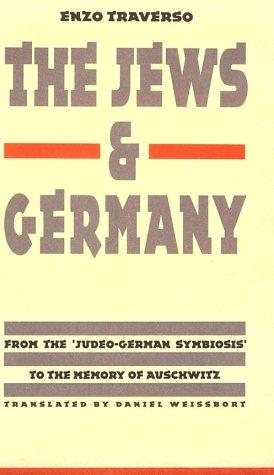
The Jews and Germany debunks a modern myth: that once upon a time there was a Judeo-German symbiosis, in which two cultures met and brought out the best in each other. Enzo Traverso argues that, to the contrary, the attainments of Jews in the German-speaking world were due to the Jews aspiring to be German, with little help from and often against the open hostility of Germans. As the Holocaust proved in murder and theft, German Jews could never be German enough. Now the works of German Jews are being published and reprinted in Germany. It is a matter of enormous difference whether the German rediscovery of German Jews is another annexation of Jewish property or an act of rebuilding a link between traditions. Traverso shows how tenuous the link was in the first place. He resumes the queries of German Jews who asked throughout the twentieth century what it meant to be both Jewish and German. Hannah Arendt, Gershom Scholem, Martin Buber, Max Horkheimer, Walter Benjamin, Theodor Adorno, Ernst Bloch, Rosa Luxemburg, Franz Kafka, and many more thinkers of genius found the problems unavoidable and full of paradoxes. In returning to them Traverso not only demolishes a sugary myth but also reasserts the responsibility of history to recover memory, even if bitter and full of pain.
Menrva's Summary
THE THESIS
The book challenges the notion of a harmonious German-Jewish cultural symbiosis, arguing instead that Jewish contributions to German culture were driven by a desire for assimilation against a backdrop of German hostility. Enzo Traverso examines the complex and often paradoxical relationship between Jewish identity and Germanness throughout the twentieth century, drawing on the works of prominent Jewish intellectuals. He contends that the historical narrative of a mutually beneficial cultural exchange is a modern myth, and that the Holocaust starkly demonstrated the impossibility of full acceptance for German Jews. The book also considers the implications of Germany's contemporary engagement with the legacy of its Jewish intellectuals.
THE SCOPE MAP
- Debunks the myth of a Judeo-German symbiosis.
- Argues Jewish cultural achievements in German-speaking lands stemmed from assimilationist aspirations.
- Highlights the open hostility faced by Jews from Germans.
- Examines the paradoxes of being both Jewish and German through the lens of intellectuals like Hannah Arendt, Walter Benjamin, and Franz Kafka.
- Analyzes the historical context of the Holocaust as a culmination of this exclusion.
- Discusses the contemporary German re-publication of works by German Jews and its potential meaning.
THE AUTHORITY PERSPECTIVE
The book is recognized for its critical examination of the historical relationship between Jews and Germany, challenging romanticized notions of cultural fusion. Enzo Traverso's work is noted for its rigorous historical analysis and its engagement with a wide array of influential Jewish thinkers. It prompts a re-evaluation of memory and history, urging a confrontation with the painful aspects of this past. The book's arguments encourage a deeper understanding of the complexities and tensions inherent in the pursuit of identity within a dominant culture.
Page Count:
215
Publication Date:
1995-01-01
ISBN-10:
0803244266
Non-Fiction
History
Cultural History
European History
Jewish Studies
Community Tags
Similar Books