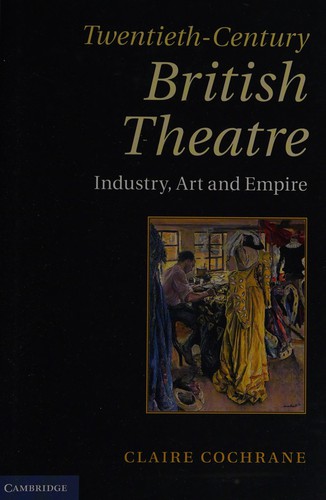
Twentieth-century British theatre
0
0
As an Amazon Associate and affiliate partner, Menrva Books earns from qualifying purchases. Learn more
Author Description
Claire Cochrane maps the experience of theatre across the British Isles during the twentieth century through the social and economic factors which shaped it. Three topographies for 1900, 1950 and 2000 survey the complex plurality of theatre within the nation-state which, at the beginning of the century, was at the hub of world-wide imperial interests, and after 100 years had seen unprecedented demographic, economic and industrial change. Cochrane analyses the dominance of London theatre, but redresses the balance in favour of the hitherto marginalised majority experience in the English regions and the other component nations of the British political construct. Developments arising from demographic change are outlined, especially those relating to the rapid expansion of migrant communities representing multiple ethnicities. Presenting fresh historiographic perspectives on twentieth-century British theatre, the book breaks down the traditionally accepted binary oppositions between different sectors, showing a broader spectrum of theatre practice.--Page 4 of cover.
Menrva's Summary
THE THESIS
This book investigates the social and economic forces that shaped British theatre throughout the twentieth century. Claire Cochrane examines the landscape of theatre across the British Isles at three key points: 1900, 1950, and 2000, reflecting the nation-state's transformation from a global imperial power to a changed economic and demographic entity. While acknowledging London's theatrical dominance, the analysis actively incorporates the experiences of the English regions and other nations within the United Kingdom. The book also addresses the impact of demographic shifts, particularly the growth of diverse migrant communities, on theatrical practices.
THE SCOPE MAP
- Analysis of theatre in the British Isles across the twentieth century.
- Examination of social and economic factors influencing theatre.
- Topographical surveys of theatre in 1900, 1950, and 2000.
- Discussion of London theatre's dominance and regional/national theatre experiences.
- Exploration of developments arising from demographic change and migrant communities.
- Fresh historiographic perspectives on twentieth-century British theatre.
- Breaking down traditional binary oppositions between different theatre sectors.
- Presentation of a broader spectrum of theatre practice.
THE AUTHORITY PERSPECTIVE
This work is recognized for its comprehensive mapping of twentieth-century British theatre, focusing on the interplay between theatrical development and socio-economic conditions. It offers a valuable rebalancing of focus, giving significant attention to regional and national theatre beyond London's established prominence. The book is noted for its fresh historiographic approach, challenging conventional divisions within the field and presenting a more inclusive view of theatrical practice. Its analysis of demographic shifts and their impact on theatre provides crucial context for understanding the evolving cultural landscape.
Page Count:
353
Publication Date:
2011-01-01
ISBN-10:
0521464889
ISBN-13:
9780521464888
Non-Fiction
History
Theatre
Cultural History
Community Tags
Similar Books