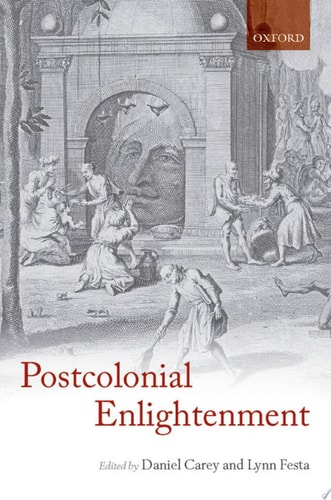
The Postcolonial Enlightenment: Eighteenth-century Colonialism and Postcolonial Theory
0
0
As an Amazon Associate and affiliate partner, Menrva Books earns from qualifying purchases. Learn more
Author Description
Over the last thirty years, postcolonial critiques of European imperial practices have transformed our understanding of colonial ideology, resistance, and cultural contact. The Enlightenment has played a complex but often unacknowledged role in this discussion, alternately reviled and venerated as the harbinger of colonial dominion and avatar of liberation, as target and shield, as shadow and light. This volume brings together two arenas - eighteenth-century studies and postcolonial theory - in order to interrogate the role and reputation of Enlightenment in the context of early European colonial ambitions and postcolonial interrogations of Western imperial aspirations.With essays by leading scholars in the field, Postcolonial Enlightenment address issues central not only to literature and philosophy but also to natural history, religion, law, and the emerging sciences of man. The contributors situate a range of writers - from Hobbes and Herder, Behn and Burke, to Defoe and Diderot - in relation both to eighteenth-century colonial practices and to key concepts within current postcolonial theory concerning race, globalization, human rights, sovereignty, and national and personal identity. By enlarging the temporal and geographic framework through which we read, the essays in this volume open up alternate genealogies for categories, events and ideas central to the emergence of global modernity.Contributors: Siraj Ahmed, Srinivas Aravamudan, Daniel Carey, Lynn Festa, Doris Garraway, Suvir Kaul, David Lloyd, Felicity Nussbaum, Karen O'Brien, and Sven Trakulhun.
Menrva's Summary
THE THESIS
This volume investigates the complex, often contradictory role of Enlightenment thought in the development of European colonial ideology and its subsequent interrogation by postcolonial theory. Editors Daniel D. Carey and Lynn L. Festa assemble a collection of essays from leading scholars to examine how eighteenth-century intellectual frameworks—ranging from philosophy and natural history to law and religion—both facilitated and were challenged by early colonial ambitions. The work argues that the Enlightenment serves as a critical, multifaceted site for understanding the genealogies of global modernity, race, and sovereignty.
THE SCOPE MAP
What You Will Find
- Analysis of eighteenth-century colonial practices alongside contemporary postcolonial theoretical frameworks.
- Examination of key Enlightenment figures including Hobbes, Herder, Behn, Burke, Defoe, and Diderot.
- Interdisciplinary research covering literature, philosophy, natural history, religion, and the emerging sciences of man.
- Exploration of thematic concepts such as globalization, human rights, national identity, and imperial sovereignty.
THE AUTHORITY PERSPECTIVE
Scholars and students of eighteenth-century literature and postcolonial theory frequently cite this volume as a critical bridge between historical inquiry and modern theoretical discourse. The text is noted for its academic rigor and its ability to synthesize diverse disciplinary perspectives into a cohesive interrogation of Western imperial history.
Page Count:
378
Publication Date:
2009-05-01
Publisher:
Oxford University Press
ISBN-10:
0199229147
ISBN-13:
9780199229147
History
Philosophy
Enlightenment
Postmodernism
Nationalism
In literature
English
English & College Success
European History
Literary Criticism
Community Tags
Similar Books