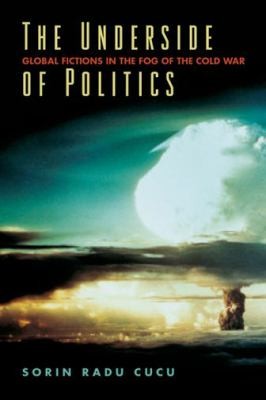
The Underside of Politics: Global Fictions in the Fog of the Cold War
0
0
As an Amazon Associate and affiliate partner, Menrva Books earns from qualifying purchases. Learn more
Author Description
This book argues that during the Cold War modern political imagination was held captive by the split between two visions of universality--freedom in the West versus social justice in the East--and by a culture of secrecy that tied national identity to national security. Examining post-1945 American and Eastern European interpretive novels in dialogue with each other and with postfoundational democratic theory, The Underside of Politics brings to light the ideas, forces, and circumstances that shattered modernity's promises (such as secularization, autonomy, and rights) on both sides of the Iron Curtain. In this context, literary fictions by Kundera and Roth, Popescu and Coover, Kiš and DeLillo become global as they reveal the trials of popular sovereignty in the "fog of the Cold War" and trace the elements around which its world discourse or global picture is constructed: the atom bomb, Stalinist show trials, anticommunist propaganda, totalitarian terror, secret military operations, and political targeting.
Menrva's Summary
THE THESIS
This book investigates how the Cold War's ideological divide and pervasive secrecy shaped the political imagination and ultimately fractured modernity's promises on both sides of the Iron Curtain. The author, Sorin Mihai Radu, examines post-1945 American and Eastern European interpretive novels, drawing connections with postfoundational democratic theory. The work reveals how literary fictions by authors such as Kundera, Roth, Popescu, Coover, Kiš, and DeLillo became global in scope as they explored the challenges of popular sovereignty amidst the
THE SCOPE MAP
- Analysis of interpretive novels from post-1945 America and Eastern Europe.
- Exploration of the dual visions of universality: Western freedom versus Eastern social justice.
- Examination of the culture of secrecy and its link to national identity and security.
- Discussion of how literary fictions reveal the trials of popular sovereignty during the Cold War.
- Identification of key elements shaping global discourse: the atom bomb, Stalinist show trials, propaganda, terror, secret operations, and political targeting.
- Dialogue with postfoundational democratic theory.
THE AUTHORITY PERSPECTIVE
The book posits that the Cold War's ideological dichotomy and a pervasive culture of secrecy fundamentally constrained political thought, leading to the erosion of modernity's core tenets. By analyzing a range of post-1945 novels from both American and Eastern European contexts, it argues that these literary works, in dialogue with democratic theory, illuminate the shared disillusionment and the construction of global discourse around pivotal Cold War events and anxieties. The author's approach highlights how fiction served as a critical lens through which the failures of secularization, autonomy, and rights were understood across the ideological divide. This analysis suggests that the literary output of the era provides a unique perspective on the global picture being constructed within the 'fog of the Cold War.'
Page Count:
253
Publication Date:
2013-01-01
ISBN-10:
0823254348
ISBN-13:
9780823254347
Non-Fiction
Fiction
Politics
History
Literary Criticism
Cultural History
Post-War
Community Tags
Similar Books