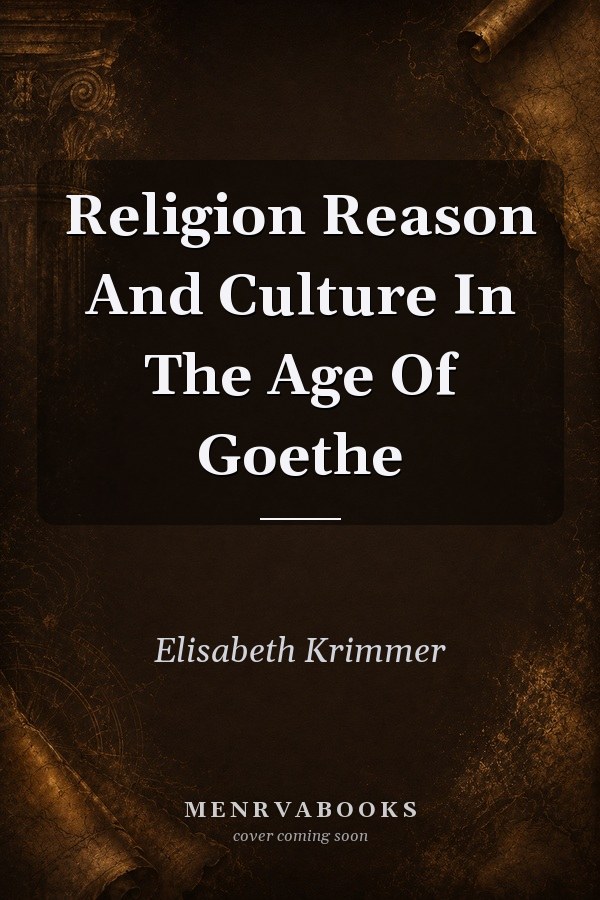
Religion, Reason, and Culture in the Age of Goethe
0
0
As an Amazon Associate and affiliate partner, Menrva Books earns from qualifying purchases. Learn more
Author Description
The eighteenth century is usually considered to be a time of increasing secularization in which the primacy of theology was replaced by the authority of reason, yet this lofty intellectual endeavor played itself out in a social and political reality that was heavily impacted by religious customs and institutions. This duality is visible in the literature and culture of late eighteenth- and early nineteenth-century Germany. On the one hand, authors such as Goethe, Schiller, and Kleist are known for their distance from traditional Christianity. On the other hand, many canonical texts from the late eighteenth and early nineteenth centuries -- from Goethe's Faust to Schiller's Die Jungfrau von Orleans to Kleist's Michael Kohlhaas -- are not only filled with references to the Bible, but invoke religious frameworks. This book investigates how culture in the Age of Goethe shaped and was shaped by a sustained and multifaceted debate about the place of religion and religious difference in politics, philosophy, and culture, enriching our understanding of the relationship between religion and culture during this foundational period in German history.
Menrva's Summary
THE THESIS
The Age of Goethe presented a complex interplay between the rise of reason and the persistent influence of religion on German culture and society. Elisabeth Krimmer's book examines how this duality manifested in the literature and culture of late eighteenth- and early nineteenth-century Germany, a period often characterized by increasing secularization. Despite authors like Goethe and Schiller being known for their distance from traditional Christianity, their canonical works are replete with biblical references and religious frameworks. The book investigates the multifaceted debate surrounding religion's place in politics, philosophy, and culture during this foundational period, thereby enriching our understanding of the religion-culture relationship.
THE SCOPE MAP
- Analysis of the tension between secularization and religious influence in 18th and early 19th-century German culture.
- Examination of canonical texts from authors such as Goethe, Schiller, and Kleist for religious references and frameworks.
- Exploration of the role of religion and religious difference in German politics, philosophy, and culture.
- Focus on the Age of Goethe as a pivotal period for understanding the relationship between religion and culture.
- Discussion of how cultural shifts shaped and were shaped by debates about religion.
THE AUTHORITY PERSPECTIVE
This book offers a nuanced exploration of the religious and cultural landscape of the Age of Goethe, a period marked by intellectual shifts towards reason yet deeply intertwined with religious customs. The publisher's description highlights the book's investigation into how canonical German literature from the late 18th and early 19th centuries engaged with religious frameworks, despite the perceived secularization of the era. It suggests that the work enriches our understanding of the complex relationship between religion and culture during a foundational period in German history. The focus on authors like Goethe, Schiller, and Kleist indicates a scholarly approach to literary and historical analysis.
Page Count:
280
Publication Date:
2013-01-01
ISBN-10:
1571135618
ISBN-13:
9781571135612
History
Religion
Non-Fiction
German history
Enlightenment
Cultural History
Community Tags
Similar Books