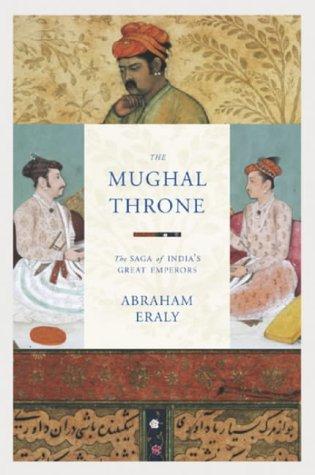
The Mughal Throne
0
0
As an Amazon Associate and affiliate partner, Menrva Books earns from qualifying purchases. Learn more
Author Description
The Mughal rule marked to the last Golden age of India, epitomized by the peerless grandeur and beauty of the Taj Mahal. Complex and talented, the Mughals built a great empire, raising the elite urban culture of India to its pinnacle. Yet the end of the Mughal rule would be as chaotic and ruinous as its dramatic rise. This book is an excellent introduction to this. And the sometimes forgotten moment of multicultural assimilation it represented. From Babur, born in 1483, to Aurangzeb, who died in 1707, Eraly gives a richly readable account of one of the most crucial and misrepresented periods of Indian history. - Back cover.
Menrva's Summary
THE THESIS
The Mughal throne chronicles the rise and fall of one of India's most significant empires. Abraham Eraly, drawing on extensive historical research, presents a richly readable account of the Mughal era, from its inception with Babur to its decline under Aurangzeb. The book explores the empire's complex achievements, its contributions to Indian urban culture and multicultural assimilation, and the eventual chaos that marked its end, offering an introduction to a crucial and often misrepresented period of Indian history.
THE SCOPE MAP
- The reign of the Mughal emperors, from Babur (born 1483) to Aurangzeb (died 1707).
- An exploration of the Mughal empire's golden age, epitomized by the Taj Mahal.
- Analysis of the empire's role in fostering elite urban culture and multicultural assimilation in India.
- An account of the empire's dramatic rise and its chaotic, ruinous decline.
- Insights into one of the most crucial and misrepresented periods of Indian history.
THE AUTHORITY PERSPECTIVE
This book is presented as an excellent introduction to the Mughal era, highlighting its significance as a golden age of India and a period of multicultural assimilation. The narrative is described as richly readable, covering the crucial span from Babur to Aurangzeb. The work aims to shed light on a complex and often misrepresented period of Indian history, detailing both the grandeur of the empire and the chaos of its decline.
Page Count:
555
Publication Date:
2004-01-01
ISBN-10:
0753817586
ISBN-13:
9780753817582
History
Non-Fiction
Biography
Mughal Empire
Cultural History
Indian History
Community Tags
Similar Books