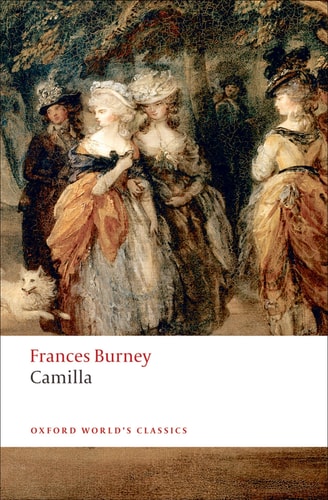
Camilla: Or, A Picture of Youth
0
0
As an Amazon Associate and affiliate partner, Menrva Books earns from qualifying purchases. Learn more
Author Description
First published in 1796, Camilla deals with the matrimonial concerns of a group of young people-Camilla Tyrold and her sisters, the daughters of a country parson, and their cousin Indiana Lynmere-and, in particular, with the love affair between Camilla herself and her eligible suitor, Edgar Mandlebert. The path of true love, however, is strewn with intrigue, contretemps and misunderstanding. An enormously popular eighteenth-century novel, Camilla is touched at many points by the advancing spirit of romanticism. As in Evelina, Fanny Burney weaves into her novel strands of light and dark, comic episodes and gothic shudders, and creates a pattern of social and moral dilemmas which emphasize and illuminate the gap between generations.About the Series: For over 100 years Oxford World's Classics has made available the broadest spectrum of literature from around the globe. Each affordable volume reflects Oxford's commitment to scholarship, providing the most accurate text plus a wealth of other valuable features, including expert introductions by leading authorities, voluminous notes to clarify the text, up-to-date bibliographies for further study, and much more.
Menrva's Summary
THE PULSE
The central conflict arises from the complex courtship between Camilla Tyrold and Edgar Mandlebert, which is repeatedly derailed by social pressures, financial instability, and personal misunderstandings. Camilla, the daughter of a country parson, navigates the rigid expectations of 18th-century society while attempting to secure her future through marriage. Her suitor, Edgar, struggles with his own internal doubts and the external influence of his guardian, creating a cycle of hesitation and missed opportunities. The narrative follows a traditional third-person structure, observing the moral development of the protagonist as she encounters various social pitfalls and familial obligations.
INSIDE THE PAGES
- Exploration of 18th-century courtship rituals and matrimonial expectations
- Integration of gothic elements alongside domestic comedy
- Detailed examination of the generational divide in moral values
- Use of social satire to critique the manners of the landed gentry
- Focus on the financial vulnerabilities of young women in the period
- Character-driven narrative emphasizing personal growth and maturation
- Inclusion of complex subplots involving extended family members
- Stylistic blend of lighthearted social observation and serious moral dilemmas
THE COLLECTIVE ECHO
Readers and critics frequently highlight the novel's effectiveness in balancing comedic social commentary with the genuine anxieties of its young protagonists. Discussion often centers on the intricate web of misunderstandings that delay the central romance, which some find frustrating while others view as a necessary mechanism for character development. Scholars often note the text's transition toward romanticism, pointing to the shift in tone between the lighter, satirical moments and the darker, more gothic sequences. The work is widely regarded as a significant study of the social and moral constraints placed upon women during the late eighteenth century.
Page Count:
992
Publication Date:
2009-07-26
Publisher:
Oxford University Press
ISBN-10:
0199555745
ISBN-13:
9780199555741
Romance
18th century
Historical
Social Satire
classic
Community Tags
Other Editions(3)

Similar Books